
Introduction to European Micro-Mobility
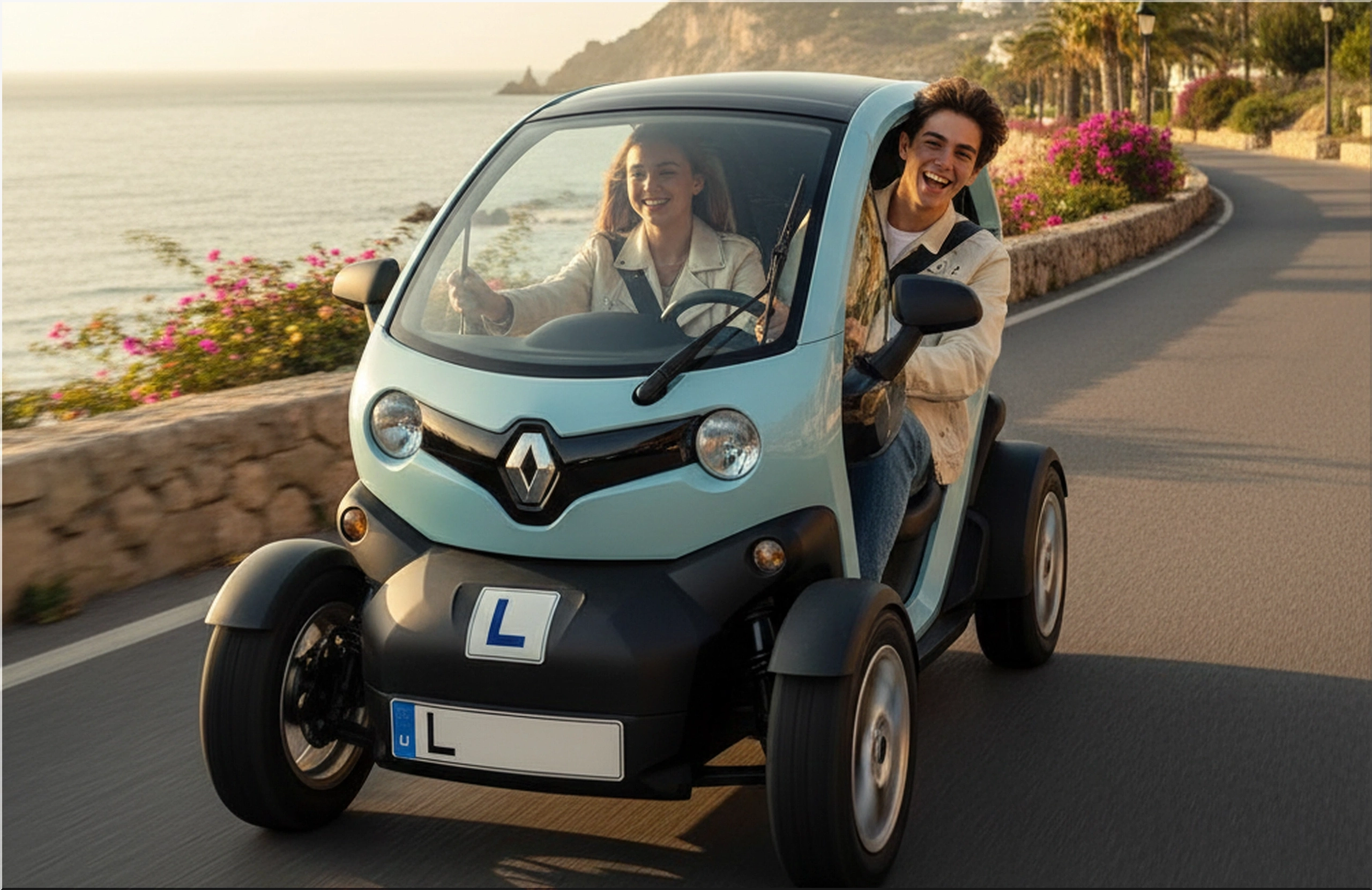
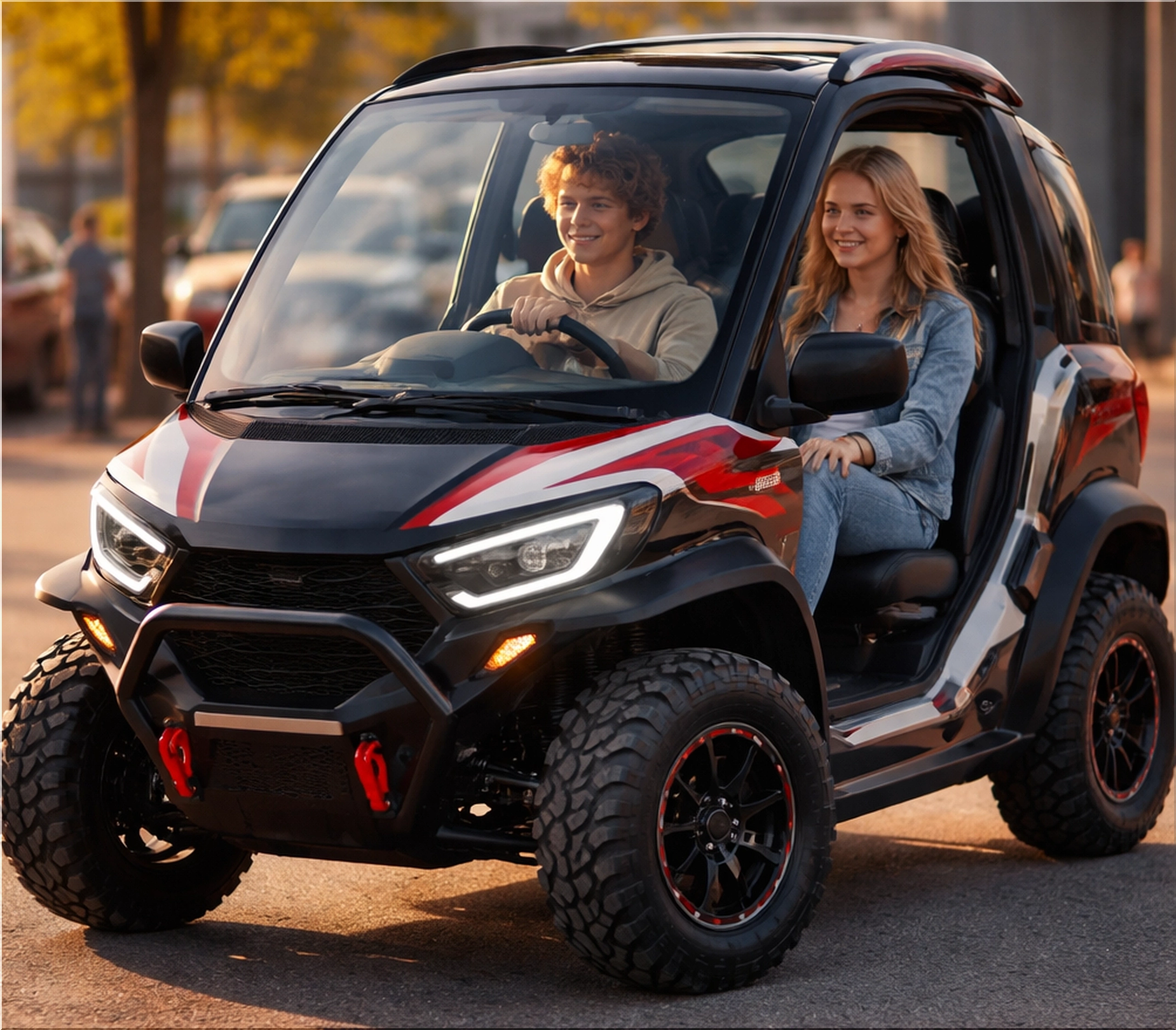
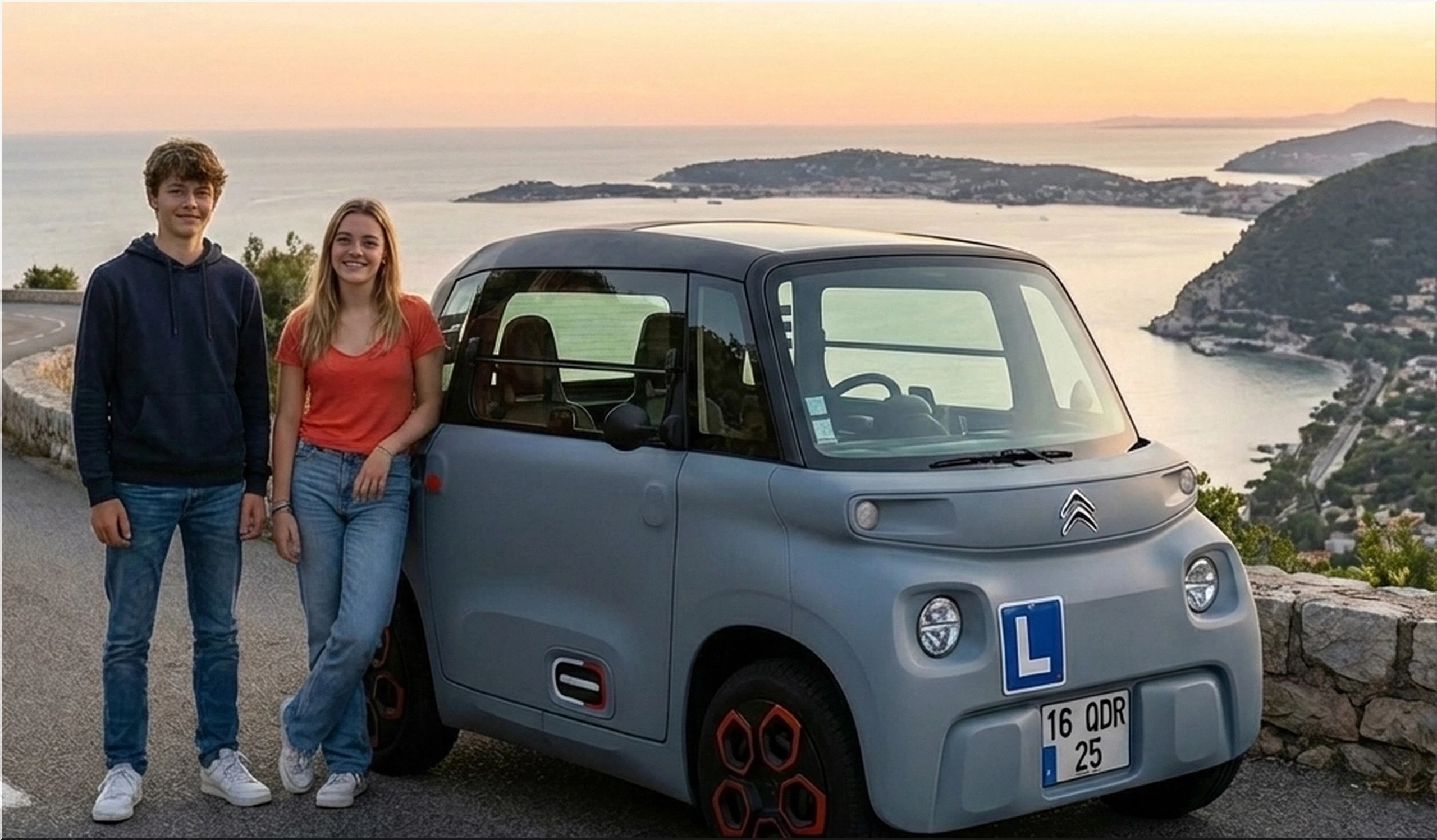
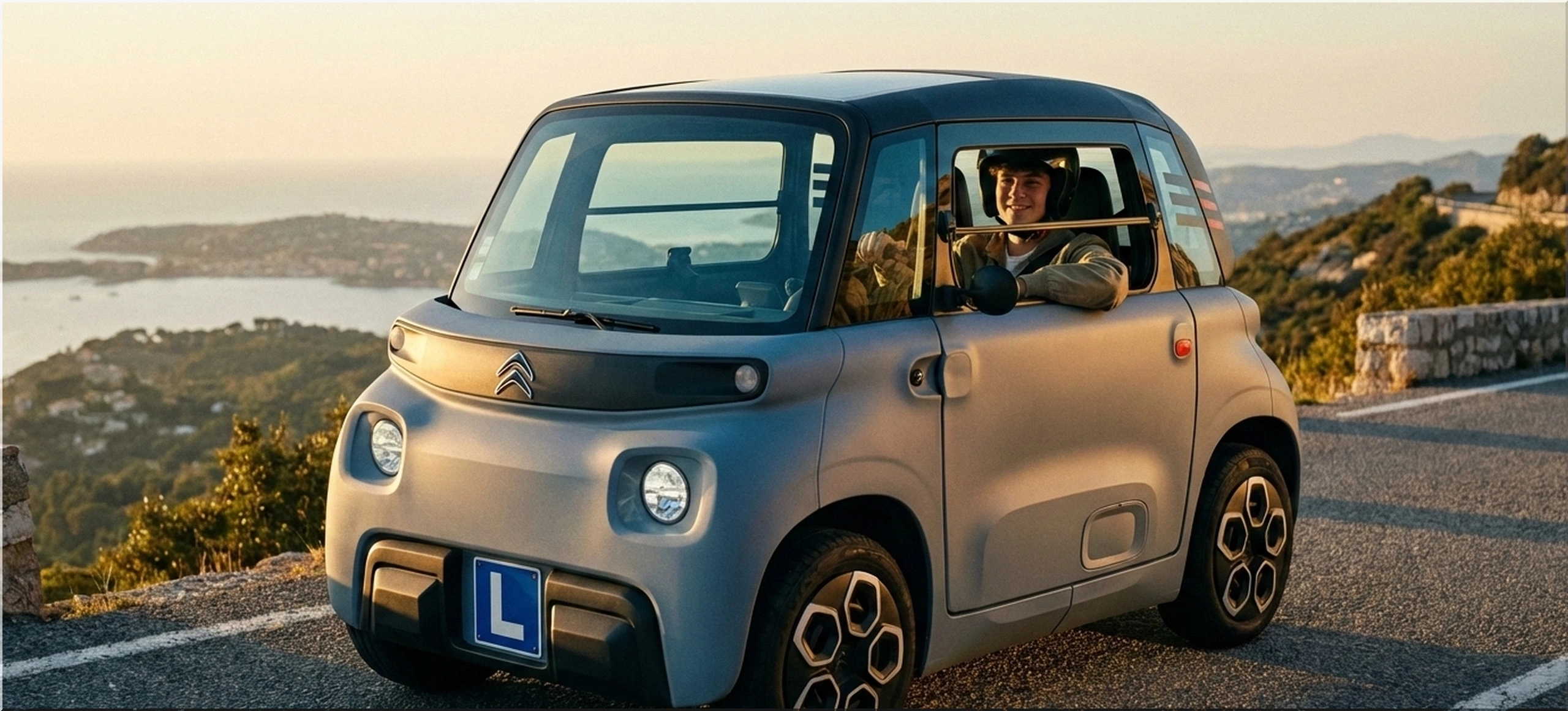
As European metropolitan areas increasingly prioritize decarbonization and the reduction of traffic congestion, the quadricycle—classified under EU Regulation 168/2013—has transitioned from a niche transport solution to a central pillar of urban mobility strategy. These vehicles, bridging the gap between two-wheeled mopeds and traditional Category M1 passenger cars, offer a weather-protected, four-wheeled alternative for younger drivers and urban commuters alike. Under the Third EU Driving Licence Directive, the harmonization of these categories ensures cross-border recognition, though significant discretion remains at the member-state level regarding minimum age and specific testing protocols.
1. Technical Taxonomy: L6e vs. L7e Specifications
The distinction between Light Quadricycles (L6e) and Heavy Quadricycles (L7e) is defined by stringent mechanical and performance parameters. These limits are not arbitrary; they dictate the safety standards the vehicle must meet and the level of driver training required.
| Technical Parameter | L6e (Light Quadricycle) | L7e (Heavy Quadricycle) |
|---|---|---|
| Maximum Design Speed | Strictly capped at 45 km/h. Governed by electronic or mechanical limiters. | Typically 80–90 km/h. Restricted from high-speed motorways in many jurisdictions. |
| Propulsion (Max Continuous Power) | ≤ 6 kW. For CI (Diesel) engines, capacity is limited to 500 cm³. | ≤ 15 kW. This allows for significantly higher torque and acceleration profiles. |
| Mass in Running Order (MIRO) | ≤ 425 kg. This excludes the mass of traction batteries in electric variants (EVs). | ≤ 450 kg for passenger transport; ≤ 600 kg for goods/utility transport. |
| Seating Capacity | Maximum of 2 persons (including driver). | Maximum of 4 persons (depending on sub-category L7e-CP). |
A critical nuance in the L7e category is the sub-classification into L7e-CP (Passenger) and L7e-CU (Commercial/Utility). The commercial variants often feature reinforced chassis and higher weight allowances to accommodate delivery duties in "Last Mile" logistics, making them indispensable for zero-emission urban delivery fleets.
2. Pan-European Licensing and Age Variance
While the European Union provides a baseline, the principle of subsidiarity allows member states to deviate from the standard recommended ages. This has created a diverse legal landscape where a 14-year-old may legally operate an L6e vehicle in France, whereas their counterpart in Ireland must wait until 16.
| Member State | L6e License (AM) Age | L7e License (B1/B) Age | B1 Implementation Status |
|---|---|---|---|
| France | 14 (Lowest in EU) | 16 (B1) | Fully Integrated |
| Italy | 14 | 16 (B1) | Fully Integrated |
| Estonia | 14 | 16 (B1) | Fully Integrated |
| Spain | 15 | 16 (B1) | Recently Activated (2024/2025) |
| Germany | 15 | 18 (B) | Not Implemented (L7e requires B) |
| Netherlands | 16 | 18 (B) | Not Implemented |
| Poland | 14 | 16 (B1) | Fully Integrated |
| Sweden | 15 | 18 (B) | Not Implemented |
In countries where the B1 category is not implemented, the L7e vehicle essentially falls under the standard Category B (Passenger Car) license. This significantly limits the L7e market in those regions, as potential young drivers are forced to wait until 18, at which point they typically opt for a full-sized vehicle.
3. Case Study: The B1 Licensing Protocol in France
France serves as the premier case study for quadricycle integration. The B1 license is increasingly viewed as a "stepping stone" that improves road safety by introducing young drivers to vehicle dynamics in a controlled, low-power environment before they graduate to full-speed cars.
Strict Examination Prerequisites
- Theoretical Competency: Unlike the AM license, which uses a simplified moped test, the B1 license requires the Examen Théorique Général (ETG). This is the exact same rigorous "Highway Code" exam required for professional drivers and standard car motorists.
- Pedagogical Instruction: A mandatory 20-hour minimum curriculum is enforced. This training focuses on "hazard perception" and the specific vulnerability of light vehicles in mixed traffic environments.
- Practical Assessment: The 25-minute road exam is conducted by state examiners. It evaluates the candidate's ability to integrate into traffic, manage lane positioning, and demonstrate eco-driving techniques. Candidates must also succeed in two maneuvers: one "braking for precision" and one reverse-motion exercise.
4. Strategic Considerations and Safety Standards
Inter-Category Recognition: It is a fundamental rule of the EU Driving Licence Directive that any holder of a full Category B license is legally entitled to operate L6e and L7e vehicles. This "grandfathering" of rights ensures that the quadricycle remains a viable second-vehicle option for households looking to downsize for urban commuting.
From a safety perspective, quadricycles occupy a unique space. They are not required to undergo the same destructive crash testing as M1 cars (Euro NCAP). However, they must comply with Type Approval standards regarding braking systems (often requiring CBS or ABS in higher-tier L7e models), lighting, and seatbelt anchorage points. The industry has seen a rapid shift toward electric powertrains, which inherently improves stability due to the low center of gravity provided by under-floor battery placement.