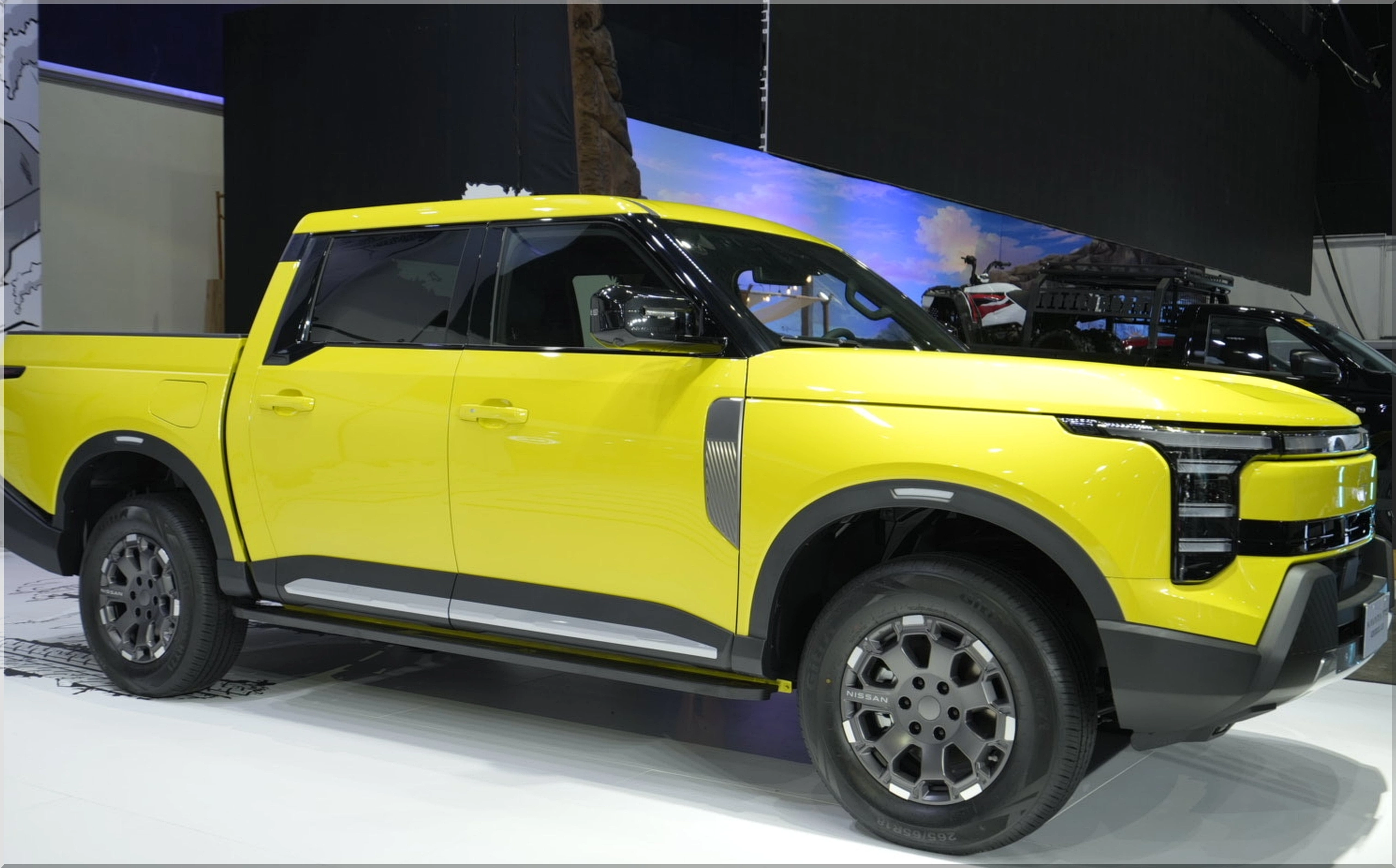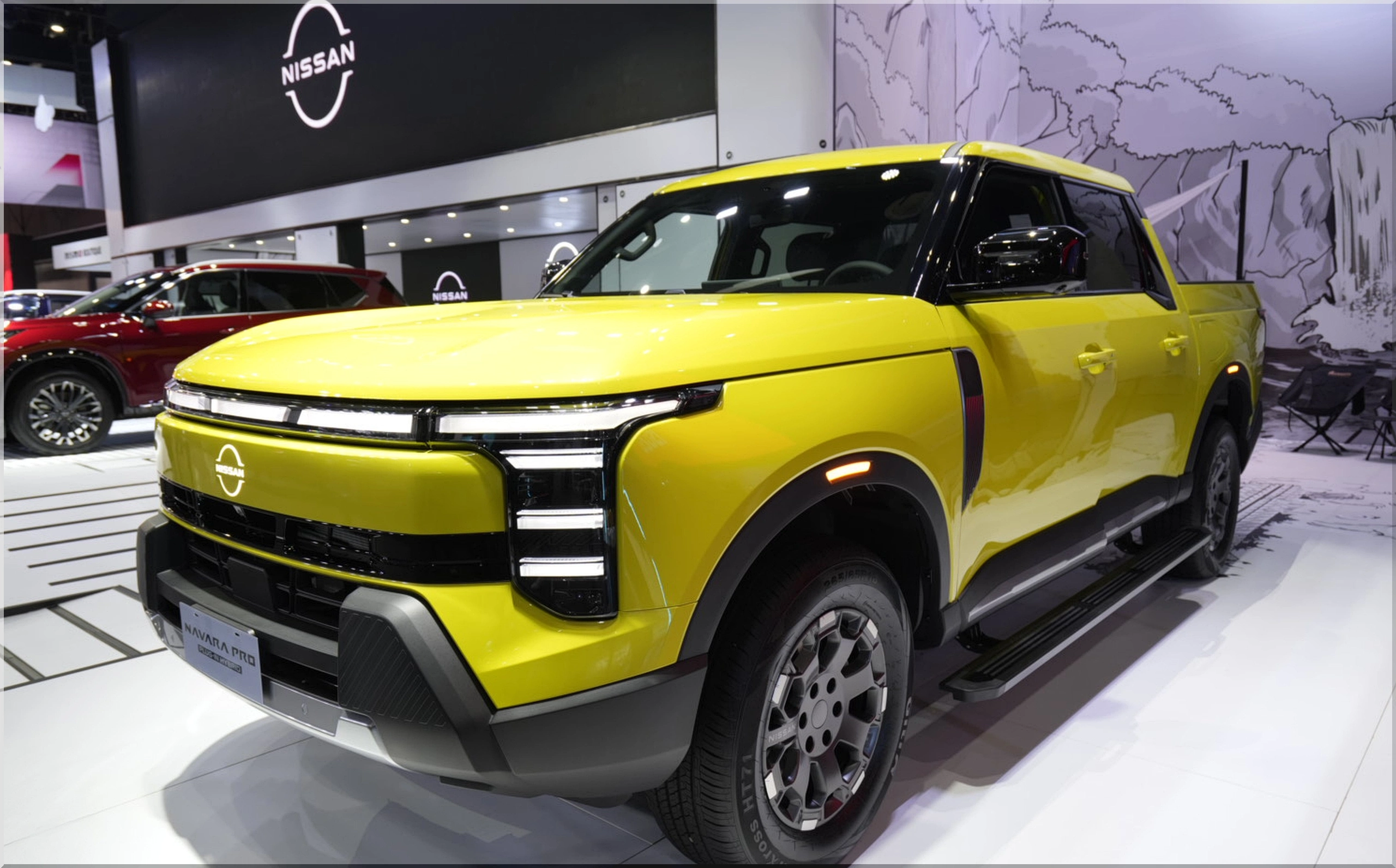

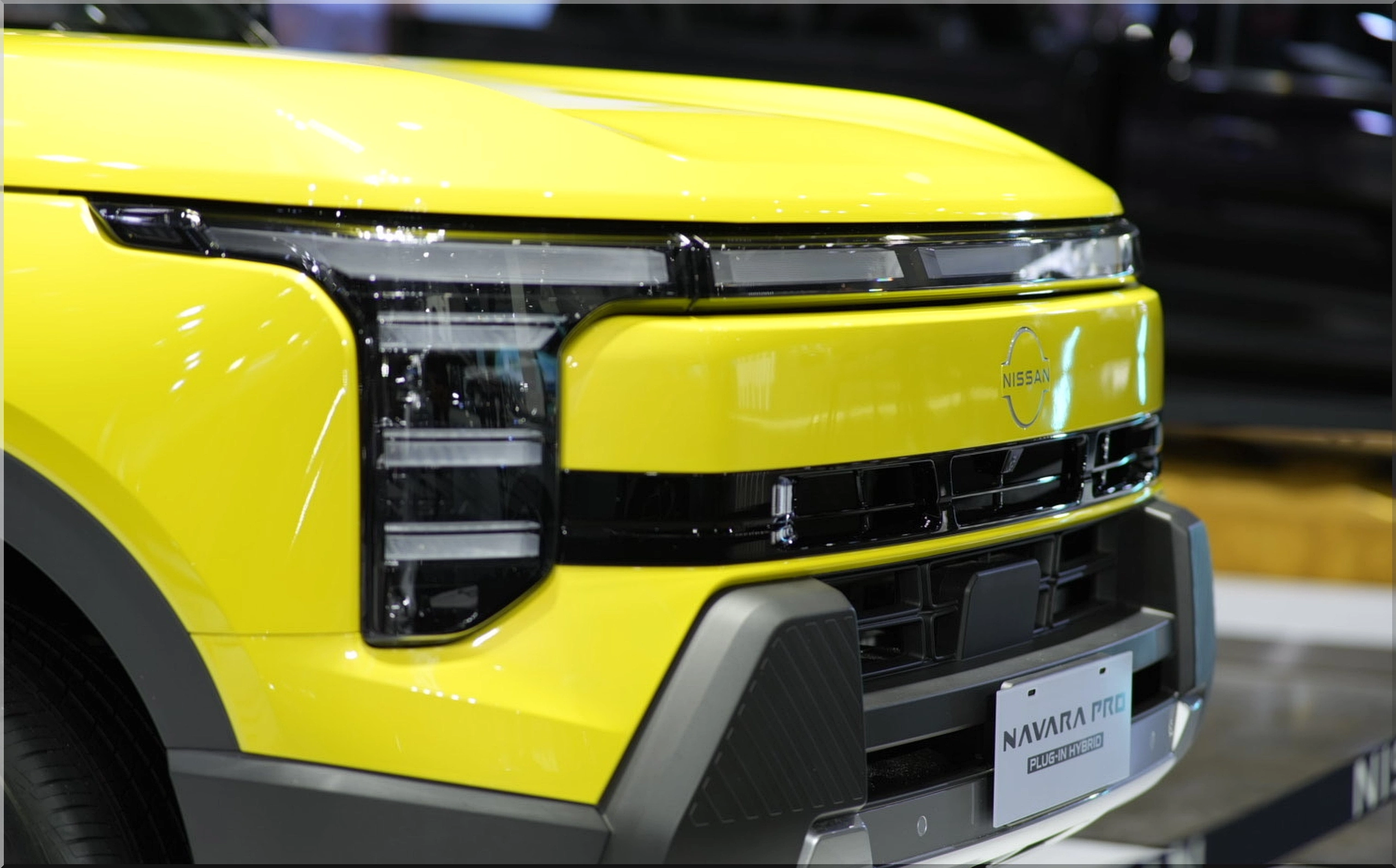
Nissan has revealed the Navara Pro Plug-in Hybrid in the Philippines, and the move says more than one new electrified pickup ever could on its own. It signals Nissan's plan to use China-developed engineering, export it into selected global markets, and enter the growing plug-in hybrid pickup race before traditional diesel loyalty gets harder to break.
The truck shown at the 10th Philippine International Motor Show sits close to the China-market Nissan Frontier Pro PHEV, which gives us the most useful technical window into the hardware. Nissan has yet to publish the final Philippine data sheet, so the China specification package gives the clearest read on size, output, drivetrain layout, chassis design, and off-road intent.
This matters. The Nissan Navara Pro PHEV arrives as buyers start looking past pure diesel for dual-cab pickups that can handle weekday commuting, site work, family driving, and light off-grid power needs from one platform.
Nissan Navara Pro Plug-in Hybrid: What Nissan Has Actually Revealed
Nissan introduced the Navara Pro Plug-in Hybrid pickup together with the Primera EV sedan as part of its 'From China' export strategy. In plain terms, Nissan now wants China to act as a product development and export hub, not only as a local sales market.
Specifically, the Navara Pro gives Nissan a new electrified ute for markets where pickups still carry real cultural and commercial weight. The Philippines makes sense as an early destination because it runs left-hand-drive vehicles, shares technical compatibility with China-market production, and has a fast-growing appetite for electrified pickups.
The confirmed public-facing message stays simple:
- Model: Nissan Navara Pro Plug-in Hybrid
- Body style: Five-seat, dual-cab pickup
- Powertrain type: Plug-in hybrid
- Market reveal: Philippines
- Strategic base: China-developed export model
- Closest technical relative: Nissan Frontier Pro PHEV
- Core rivals: BYD Shark 6 DMO, Changan Nevo Hunter K50 REEV, Radar RD6 EM-P
Nissan has not confirmed Australia, Europe, or other ASEAN markets for the Navara Pro Plug-in Hybrid yet. That gap matters because right-hand-drive conversion, local homologation, towing rules, emissions rules, and dealer support all affect launch timing.
Why the Navara Pro PHEV Strategy Makes Sense
Nissan knows the pickup market still runs on trust, torque, and durability. Pure EV pickups can impress on paper, but they still face range loss under towing, charging access issues in rural areas, and high battery cost. A plug-in hybrid pickup truck gives Nissan a cleaner middle path.
In addition, the PHEV layout lets owners run short daily trips on electric power while keeping a petrol engine for longer drives, heavy loads, and poor charging coverage. That setup suits markets where pickups act as family cars Monday through Friday and work tools on demand.
From an expert perspective, the Navara Pro PHEV also helps Nissan answer Chinese-brand rivals without abandoning its pickup identity. BYD, Changan, and Radar moved early with electrified utes in Southeast Asia. Nissan now brings a familiar badge, a ladder-frame formula, and a high-output hybrid system into the same fight.
Nissan Navara Pro PHEV Specs: Closest Technical Read From Frontier Pro
Looking at the data, the China-market Nissan Frontier Pro PHEV gives the clearest technical picture. The Philippine Navara Pro may get market-specific tuning, trim changes, or equipment revisions, but the known China package points to a large, serious, electrified pickup rather than a soft lifestyle experiment.
| Data point | Nissan Frontier Pro PHEV technical reference |
|---|---|
| Length | 5,520 mm / 217.3 in |
| Width | 1,960 mm / 77.2 in |
| Height | 1,950 mm / 76.8 in |
| Wheelbase | 3,300 mm / 129.9 in |
| Curb weight | 2,500-2,540 kg / 5,512-5,600 lb |
| Gross vehicle weight rating | 3,315-3,355 kg / 7,308-7,397 lb |
| Ground clearance | 231 mm / 9.1 in, fully loaded |
| Approach angle | 30 degrees |
| Departure angle | 25 degrees |
| Cargo bed | 1,520 x 1,600 x 490 mm / 59.8 x 63.0 x 19.3 in |
| Wheels and tires | 18-inch wheels, 265/65R18 tires |
| Engine | 1.5-liter turbocharged four-cylinder gasoline |
| Transmission | Dedicated hybrid automatic with integrated motor |
| Combined output | Over 300 kW / over 402 hp |
| Combined torque | 800 Nm / 590 lb-ft |
| EV-only range target | Up to 135 km / 84 miles, NEDC |
| Rear suspension | 5-link |
| Front suspension | Independent double wishbone |
| V2L output | Up to 6 kW |
The size tells a clear story. At 5,520 mm long, the Frontier Pro-based package stretches past many familiar midsize pickups and moves toward the upper edge of the segment. The 3,300 mm wheelbase also supports a larger cabin and more stable highway manners, though it may require more care on tight trails.
Consequently, this truck targets buyers who want pickup capability without accepting an old-school cabin, weak low-speed refinement, or diesel-only operating costs.
Powertrain: Why 1.5 Liters Can Work In A Big Pickup
A 1.5-liter turbocharged four-cylinder engine looks small on paper for a pickup this large. The electric motor changes that math.
The hybrid system pairs the compact turbo engine with a transmission-mounted electric motor. That layout lets the motor supply instant low-speed torque, fill gaps before the turbo reaches full output, and reduce engine load in city traffic. The result, based on the China technical reference, reaches over 300 kW and 800 Nm.
That torque figure matters more than the displacement. A diesel pickup often earns loyalty because it pulls hard at low revs. A high-output PHEV can match or exceed that shove with electric torque, then use the engine for sustained cruising and battery support.
By comparison, the BYD Shark 6 DMO lists 321 kW and 650 Nm. The Nissan-related system gives away peak power on paper but hits harder on torque. That single metric could help the Navara Pro Plug-in Hybrid appeal to buyers who tow, climb, or drive loaded.
Drivetrain And Off-Road Hardware: The Serious Bits
The Nissan Navara Pro PHEV story gets more convincing when the drivetrain hardware enters the conversation. The Frontier Pro reference package uses Intelligent AWD, a dedicated hybrid transmission, a terrain-on-demand transfer setup, selectable 4High and 4Low, and an available electromechanical rear differential lock.
That list matters because many electrified pickups use software to imitate hardware. Nissan appears to keep more traditional truck logic in play. Low range helps when a vehicle needs controlled torque at low speed. A locking rear differential helps both rear wheels turn together when one tire loses grip.
Key hardware points include:
- Dedicated hybrid transmission with integrated electric motor
- Intelligent AWD as standard on the reference model
- Selectable 4High and 4Low
- Hybrid, Pure Electric, Performance, and Snow drive modes
- Available electromechanical rear differential lock
- Four-wheel disc brakes
- Electronic parking brake
- Independent double-wishbone front suspension
- 5-link rear suspension
The 30-degree approach angle and 25-degree departure angle give the truck credible trail geometry for a long dual-cab body. The 231 mm loaded ground clearance also gives useful underbody room when payload or passengers compress the suspension.
Chassis, Suspension, And Ride Logic
Nissan chose a 5-link rear suspension for the Frontier Pro PHEV reference model. That choice trades the raw load-first simplicity of leaf springs for better wheel control, ride comfort, and axle behavior over broken roads.
Specifically, a 5-link layout can control axle movement more precisely during acceleration, braking, and cornering. That makes sense for a pickup with 800 Nm available through a hybrid system. It also helps cabin comfort, which matters because the Navara Pro targets family and lifestyle use as much as work duty.
The front independent double-wishbone setup also fits the same logic. It supports steering control, front-end compliance, and a wider tuning range than a basic layout. Nissan needs that balance because the truck carries a heavy hybrid system, a large body, and off-road expectations.
Pro-Tip: Watch final payload and towing ratings before judging this truck as a workhorse. Torque grabs headlines, but payload, cooling capacity, brake tuning, axle ratings, and battery thermal control decide how a PHEV pickup performs under real load.
Interior And Utility: Pickup Cabin Meets Power Station
The China-market technical sheet lists a five-seat cabin, 60:40 split-folding rear seats, a 10-inch driver display, and a 14.6-inch infotainment touchscreen. Available front-seat heating, ventilation, and seat-back massage also move the cabin closer to premium SUV territory.
In addition, the truck includes a panoramic roof, roof rails, and an available electronic retractable cargo cover. Those features point at buyers who expect their pickup to act as a family vehicle, weekend hauler, and daily driver.
The 6 kW V2L system deserves attention. It can power tools, lights, cooking gear, appliances, and camping equipment from the hybrid battery system. The reference layout lists cargo-area outlets including 220V/10A, 220V/16A, and 12V/10A access.
That gives Nissan an answer to the generator question. For contractors, outdoor users, and rural owners, exportable power can reduce the need to carry separate equipment. For families, it turns the truck bed into a mobile utility zone.
Pricing: China Gives A Clue, The Philippines Still Waits
Nissan has not announced official Philippine pricing for the Navara Pro Plug-in Hybrid. The China-market Frontier Pro PHEV price range gives the only official anchor: 189,900 to 249,900 yuan. Converted at recent mid-market rates, that equals roughly $28,000 to $36,900 before market-specific taxes, tariffs, shipping, dealer costs, and local equipment changes.
That number will not translate cleanly into Philippine showroom pricing. Import duties, excise tax, exchange-rate movement, distributor margin, launch supply, and trim content can change the final sticker quickly.
By comparison, the BYD Shark 6 DMO in the Philippines sits around $38,700 to $42,400 based on published local prices converted to USD. Changan's Nevo Hunter K50 REEV costs roughly $27,500 to $31,900, while the Radar RD6 EM-P has appeared in the same general lower-to-mid $30,000 space based on Philippine reporting.
Navara Pro PHEV Vs Key Plug-In Hybrid Pickup Rivals
The Nissan Navara Pro Plug-in Hybrid enters a fast-moving electrified pickup field. The strongest rivals already offer real specs, local pricing, and visible showroom momentum.
| Model | Powertrain type | Output | EV range | Towing or payload data | Approx. USD price context |
|---|---|---|---|---|---|
| Nissan Navara Pro PHEV / Frontier Pro reference | 1.5 turbo PHEV, AWD | Over 402 hp, 590 lb-ft | Up to 84 miles NEDC | GVWR 7,308-7,397 lb reference | $28,000-$36,900 China-equivalent |
| BYD Shark 6 DMO | 1.5 turbo PHEV, AWD | 430 hp, 479 lb-ft | Market data varies by cycle | 5,512 lb braked towing, about 1,764 lb payload in PH reports | $38,700-$42,400 PH-equivalent |
| Changan Nevo Hunter K50 REEV | Range-extender pickup, AWD in 4x4 trim | 268 hp, 347 lb-ft | Up to 112 miles | 5,512 lb towing | $27,500-$31,900 PH-equivalent |
| Radar RD6 EM-P | 1.5 turbo PHEV, dual-motor layout | 457 hp, 486 lb-ft | About 51 miles | Payload near 2,000 lb in reports | About $27,400-$31,400 PH-equivalent |
Nissan wins on torque against these main plug-in and range-extender rivals. BYD and Radar fight back with stronger published horsepower figures, while Changan makes a value case with lower pricing and a long stated electric range.
The real test will involve final Philippine specs. Nissan needs aggressive pricing, a clear warranty package, and verified tow and payload ratings. Without those numbers, the Navara Pro PHEV looks promising but not complete.
What Buyers Should Watch Before Launch
The right buyer question sounds simple: should you wait for the Nissan Navara Pro Plug-in Hybrid or buy a rival now?
The answer depends on use case. If you need a truck right now, BYD, Changan, and Radar already have visible pricing and availability in the Philippines. If you want Nissan dealer support, stronger torque, more traditional 4x4 hardware, and a familiar pickup badge, waiting makes sense until Nissan releases final details.
Check these items before placing a deposit:
- Final Philippine output figures because market tuning may differ from China specs.
- Official towing capacity because torque alone does not set tow rating.
- Payload rating because hybrid weight can eat into carrying capacity.
- Battery warranty because PHEV ownership depends on long-term confidence.
- Charging support because home charging decides daily fuel savings.
- V2L outlet configuration because power output varies by market.
- Service coverage because new electrified pickups need trained technicians.
Pro-Tip: Compare total ownership cost across five years, not only the sticker price. A plug-in hybrid pickup can save fuel on short trips, but insurance, tire cost, dealer servicing, battery warranty terms, and resale confidence can erase weak assumptions fast.
Why The Navara Pro PHEV Could Matter For Nissan
Nissan has spent decades building pickup credibility through models like the Hardbody, Navara, Frontier, and Patrol-adjacent off-road work. The Navara Pro Plug-in Hybrid gives that history a new technical direction.
The truck also gives Nissan a faster answer to China's electrified pickup push. Rather than waiting for a clean-sheet global pickup program to reach every market, Nissan can use a China-developed model, test export appetite, and learn quickly from left-hand-drive markets.
This strategy carries risk. Some buyers may question China-built Nissan products. Others may worry about long-term battery durability in heat, floods, rural roads, and towing duty. Nissan needs clear warranty terms and transparent engineering details to turn curiosity into trust.
Consequently, the Navara Pro PHEV has to prove two things at once. It must work like a proper pickup, and it must make the plug-in hybrid case feel practical rather than experimental.
Actionable Question: Should Pickup Buyers Wait For The Nissan Navara Pro PHEV?
Wait if you want a high-torque electrified pickup with Nissan branding, likely strong off-road hardware, and a more traditional truck layout than some newer Chinese rivals. The 800 Nm torque figure, available rear differential lock, low-range transfer setup, and 6 kW V2L system make the Frontier Pro-based package worth tracking closely.
Buy now if your current truck needs replacement, you already have a clear rival offer, or you need confirmed price, payload, and warranty details today. Nissan has shown the product, but the final Philippine specification sheet and local price will decide the business case.
From an expert perspective, the smartest move is patience. The Nissan Navara Pro Plug-in Hybrid could become one of the most important electrified pickups in Southeast Asia, but only if Nissan prices it close to the BYD Shark 6 DMO, protects owners with a strong warranty, and publishes work-grade towing and payload numbers that match the torque story.