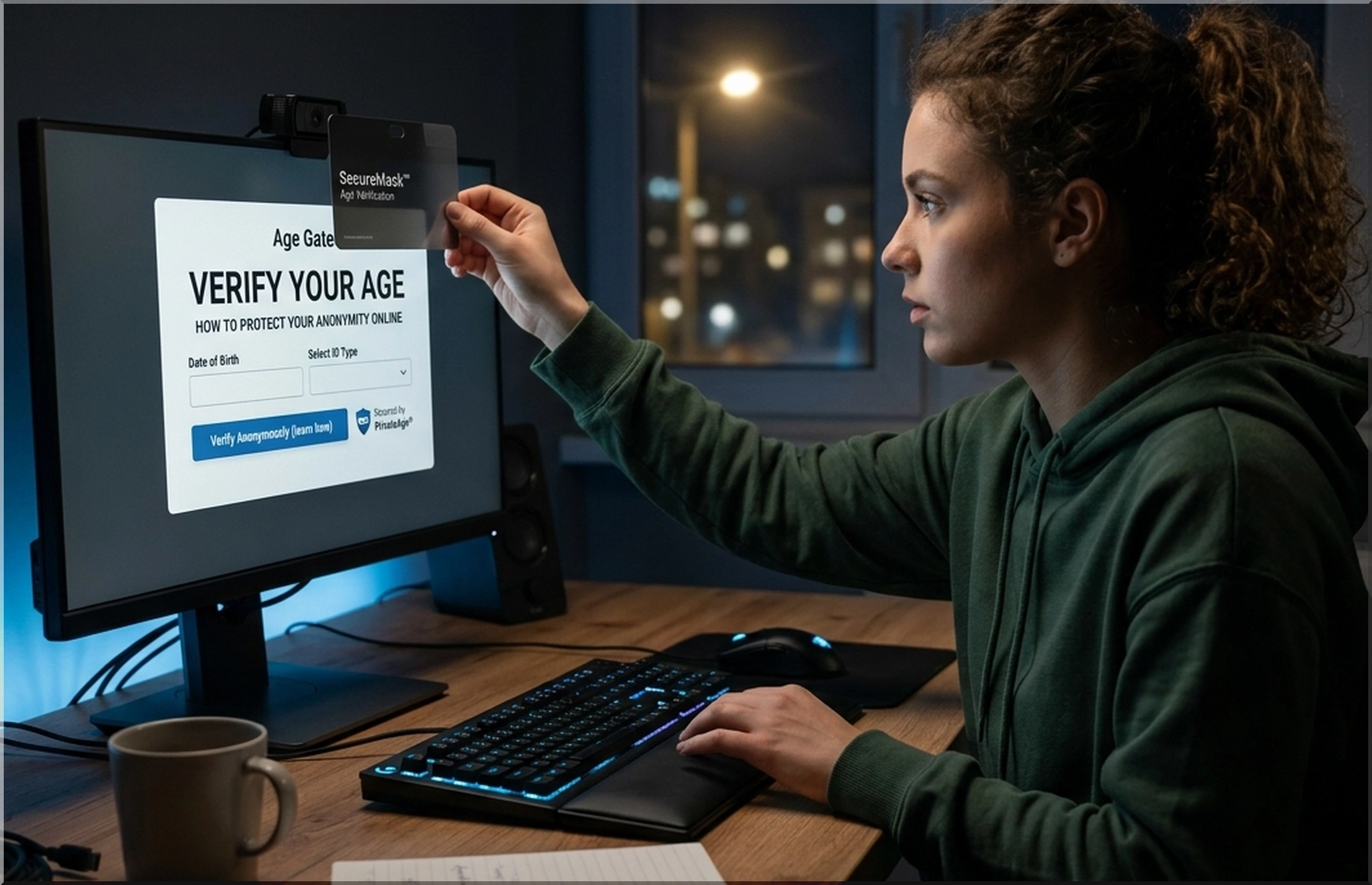



You open a link to a tweet someone sent you. Instead of the tweet, you get a pop-up: “Verify your age to continue.” It asks for a photo of your driver’s license or a scan of your face. You close the tab. That video of a skateboarding bulldog isn’t worth handing over the very data that makes you trackable for life.
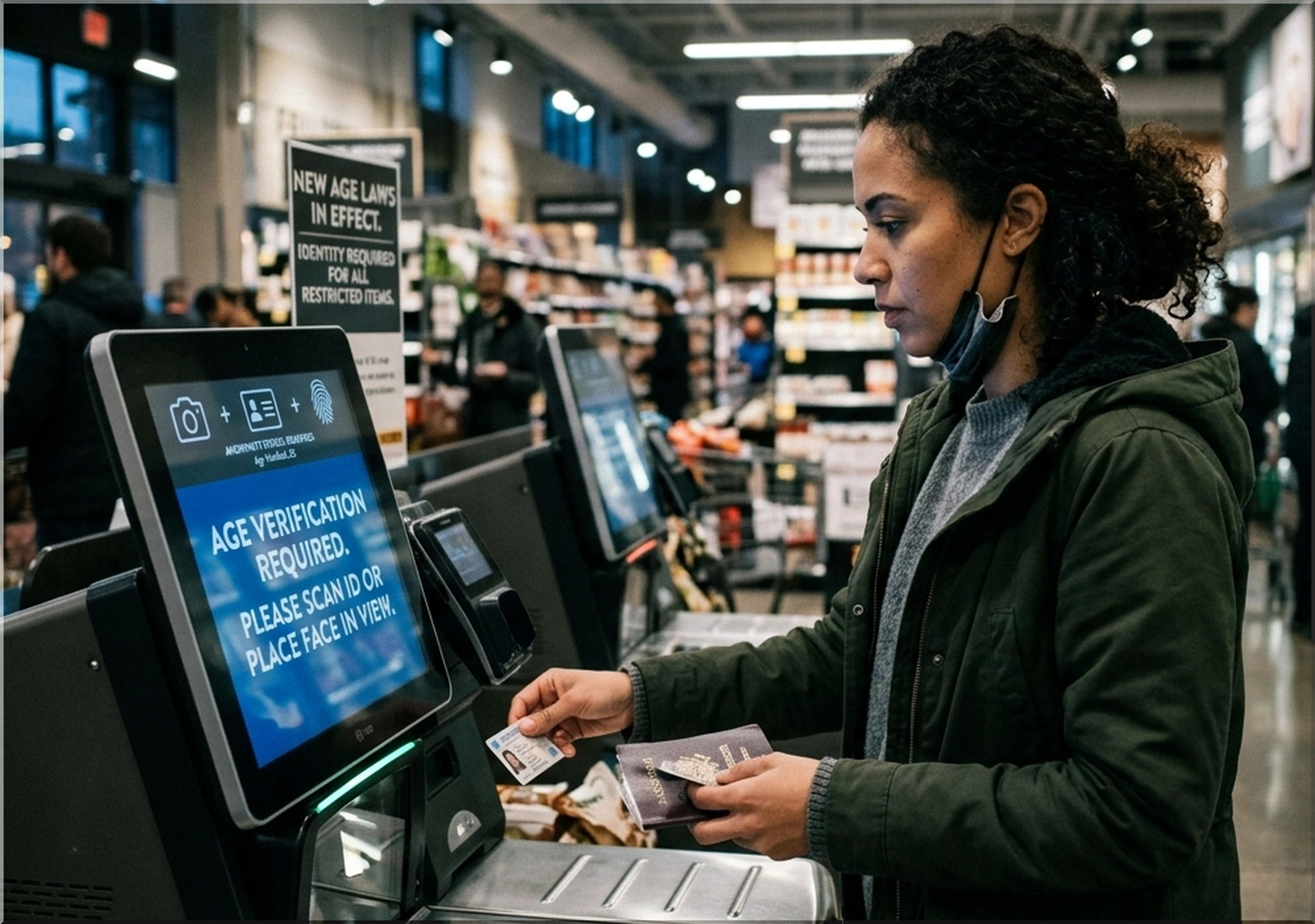
This scene plays out millions of times a day now. Governments across the US, UK, Europe, and Australia are pushing laws that force social media platforms and websites to check how old you are before you can see anything. The stated goal—protecting kids online—sounds noble. But the path we’re taking threatens to dismantle the open web, erode online anonymity, and hand a permanent ID card to anyone who wants to read, watch, or speak.
A Global Wave of Mandatory Age Checks
State legislatures in the US have passed more than a dozen bills that demand social media platforms run age verification on every user. Louisiana’s law started the trend in 2023, requiring sites with a substantial portion of adult content to check IDs. Utah and Arkansas followed quickly, and now a wave of similar proposals sweeps through Texas, Ohio, and beyond.
Overseas, the UK’s Online Safety Act pressures platforms to use age verification technology or face huge fines. Australia’s eSafety commissioner pushes for mandatory checks, and the EU’s Digital Services Act cracks down on “systemic risks” to minors. Almost overnight, the internet you grew up with is being walled off, piece by piece.
How the Tech Decides You’re Old Enough
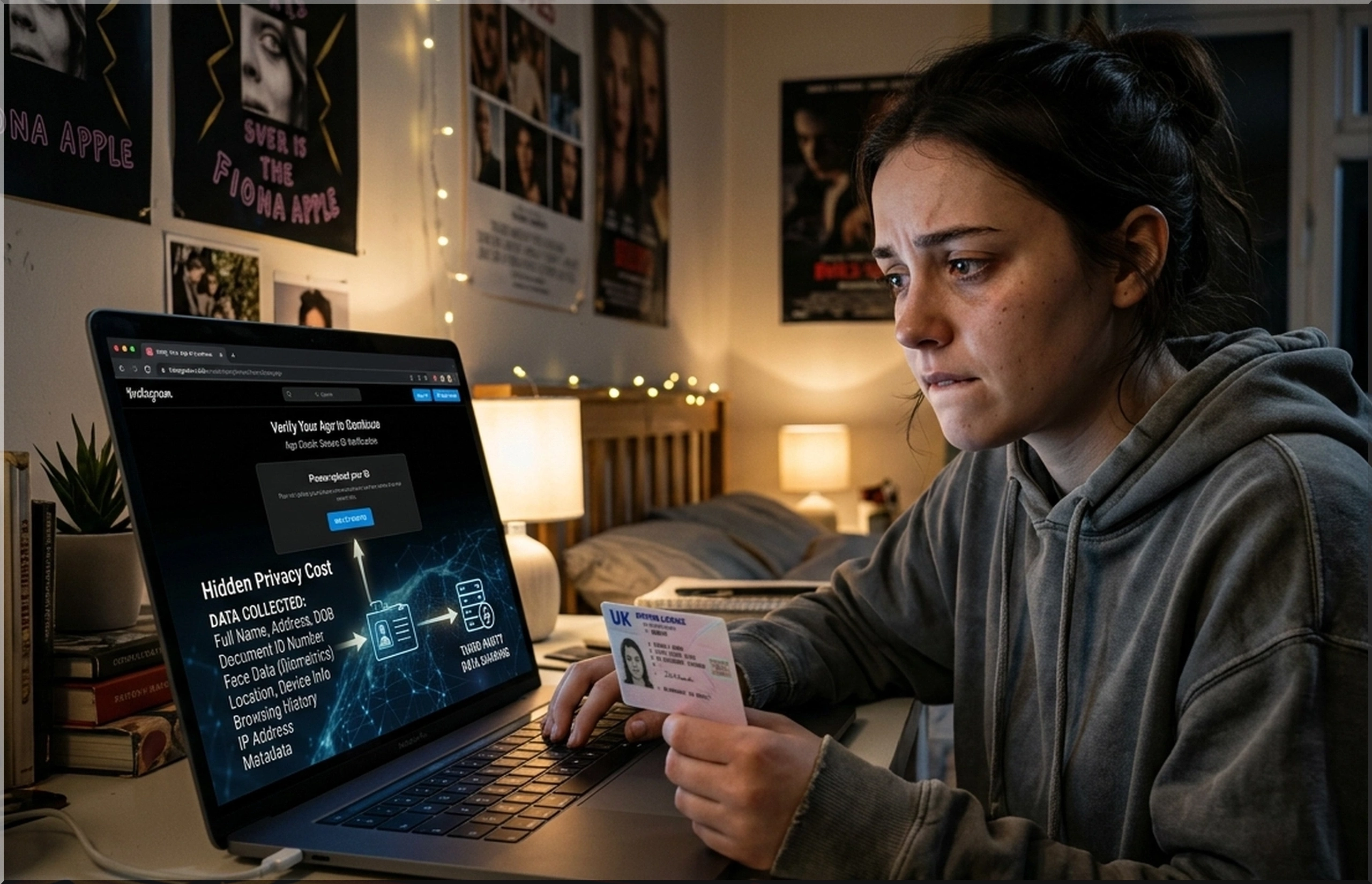
Most social media age verification falls into a few camps: uploading a government ID, scanning your face to estimate age, charging a small amount to a credit card, or using a third-party service that checks databases. Each method carries its own privacy price tag.
| Method | What It Asks For | The Hidden Cost |
|---|---|---|
| Government ID scan | Driver’s license, passport, or national ID card | Creates a permanent link between your real name and your online activity; exposes you to data breaches and government requests. |
| Facial age estimation | A live photo or video of your face | Collects biometric data that can be inaccurate for certain skin tones and ages; often stores that data for training AI. |
| Credit card check | Credit or debit card number | Excludes millions of unbanked adults; ties financial data to browsing history. |
| Third-party age assurance | Personal details checked against public records | Centralizes sensitive information in a single company that can track you across sites. |
None of these methods simply confirm you’re over 18 and then disappear. They create a trail that sticks to your online activity forever.
The Privacy Side Effect Nobody Ordered
When you scan your ID to read a post or watch a clip, that image doesn’t vanish. It sits on a server somewhere. Age verification companies have already suffered data leaks exposing hundreds of thousands of identity documents. Law enforcement can request those records without a warrant in many cases. And the platform now holds a digital fingerprint that follows you everywhere you go on that service.
Suddenly your throwaway account for asking a health question or sharing a political opinion becomes anything but throwaway. That silence you hear isn’t apathy. It’s people deciding that speaking up online isn’t worth the risk of having their real name attached. The chilling effect touches everyone from whistleblowers to support group members who rely on a buffer between their public and private selves.
Advertisers and data brokers love this shift. Every age check is another signal they can use to build a richer profile on you. What starts as a child-safety tool quickly turns into an infrastructure of constant surveillance.
Who Gets Pushed Offline When You Must Show Papers
Age gates don’t just block kids. They lock out adults who cannot or will not hand over ID. A domestic abuse survivor planning an exit can’t safely search for resources if every site demands her driver’s license. An activist in a repressive country loses the cover of a pseudonym the moment a check demands a passport number. A teenager wrestling with their identity loses access to the only community that understands them.
Mandatory ID creates a two-tier internet: one for people with pristine paperwork and zero fear, and one for everyone else. The people who need the internet’s protective cloak the most are the first ones it disappears for. Millions of adults lack a government-issued photo ID. Others simply refuse to upload their most sensitive documents to a site that might get hacked next week. That refusal shouldn’t cost them the ability to read the news, join a conversation, or watch a video.
Why Kids Will Still Find a Way Around the Gates
In the ’90s, a simple “Enter your birthdate” drop-down stopped almost nobody. Today’s high-tech checks aren’t much better. A 15-year-old with a free VPN can appear to be in a country with no restrictions. An older sibling’s ID works just as well as the real owner. Facial age estimation often overestimates ages for certain ethnicities and can be tricked with a little stage makeup.
Meanwhile, the platforms that install these checks rarely invest in the hard, messy work of real online safety: thorough content moderation, digital literacy education, and mental health support. We end up with a privacy dragnet that fails at its only stated goal. Kids need online spaces that teach resilience, critical thinking, and empathy. Handing over a driver’s license doesn’t build any of those things. It just teaches them that surveillance is the price of entry.
History Whispers That This Won’t End Well
In 1998, the US passed COPPA, requiring sites to get parental consent before collecting data from children under 13. What happened? Kids just lied about their age and kept signing up. Facebook tried a real-name policy to supposedly make the platform safer; it ended up outing LGBTQ+ users to their employers and families. The UK spent millions trying to build an social media age verification system for adult content, only to scrap the idea in 2019 after technical failures and privacy protests.
The pattern repeats: build a gate, watch people walk around it, and collect a mountain of sensitive data that eventually leaks. We never seem to learn that you can’t ID-check your way to a safer society. Each failed experiment leaves behind a database of personal information that outlives the policy it was meant to enforce.
What You Can Actually Do Right Now
You don’t have to sit back and accept a future where every click requires a passport scan. A few practical moves can protect your privacy and push back against this trend.
- Use a trustworthy VPN that keeps no logs. A VPN hides your traffic from your internet provider and can make it look like you’re in a place without age checks. Choose one with a proven no-logs policy and independent audits.
- Switch to a privacy-first browser. Firefox with strict tracking protection or Brave shields you from the fingerprints that sites use to link your identity across the web.
- Keep your identity separate with email aliases. Services like SimpleLogin or Firefox Relay let you create single-use email addresses, so a random forum sign-up never touches your real inbox.
- Support digital rights organizations. Groups like the Electronic Frontier Foundation (EFF) fight mandatory ID laws in court and push lawmakers to defend anonymity. A small donation or a public signal boost helps.
- Contact your representatives. A short email or call to your local legislator can tip the balance. Tell them you want child safety laws that don’t force everyone to hand over ID. Share concrete alternatives like device-level parental controls and better in-app reporting tools.
- Talk about it. The more people realize that “social media age verification” often means “identity verification,” the harder it becomes for lawmakers to pass these rules without a public fight. Share articles (like this one) with friends and family who think a quick ID scan is no big deal.
Quick privacy habits to build today:
- Turn off ad personalization in your device settings.
- Delete old accounts you no longer use.
- Use a password manager so a single breach doesn’t cascade across your logins.
- Say no when a site asks for more data than it needs to function.
The web grew into a wild, weird, and wonderful place because anyone could show up without proving who they were first. Losing that freedom means losing the chance for the next great idea, the next support group, the next whistleblower to emerge from anonymity. The tools to push back are already in your hands. Use them.
Age Verification Laws Are Spreading Fast. Your Anonymity Is the First Thing to Go.