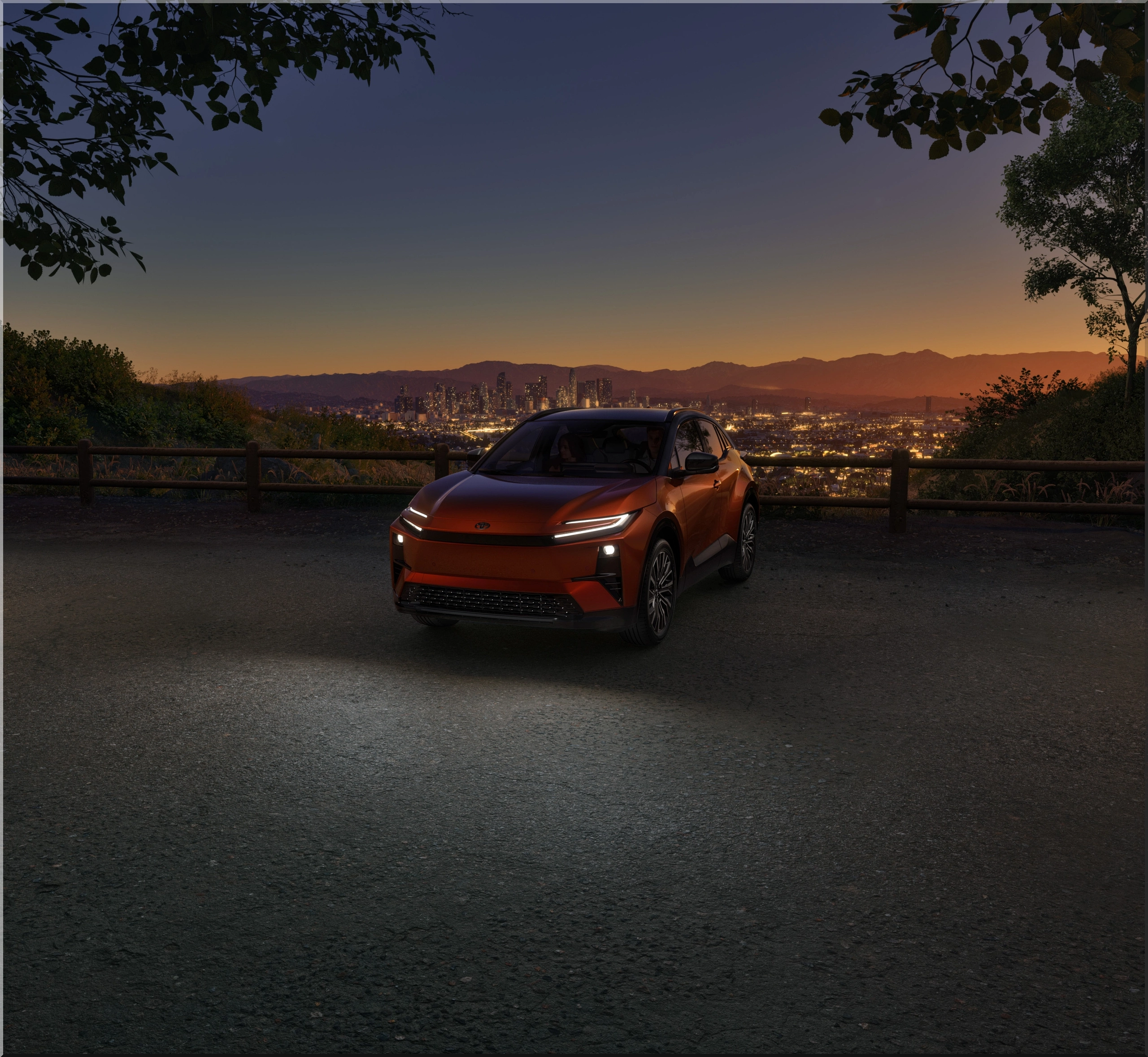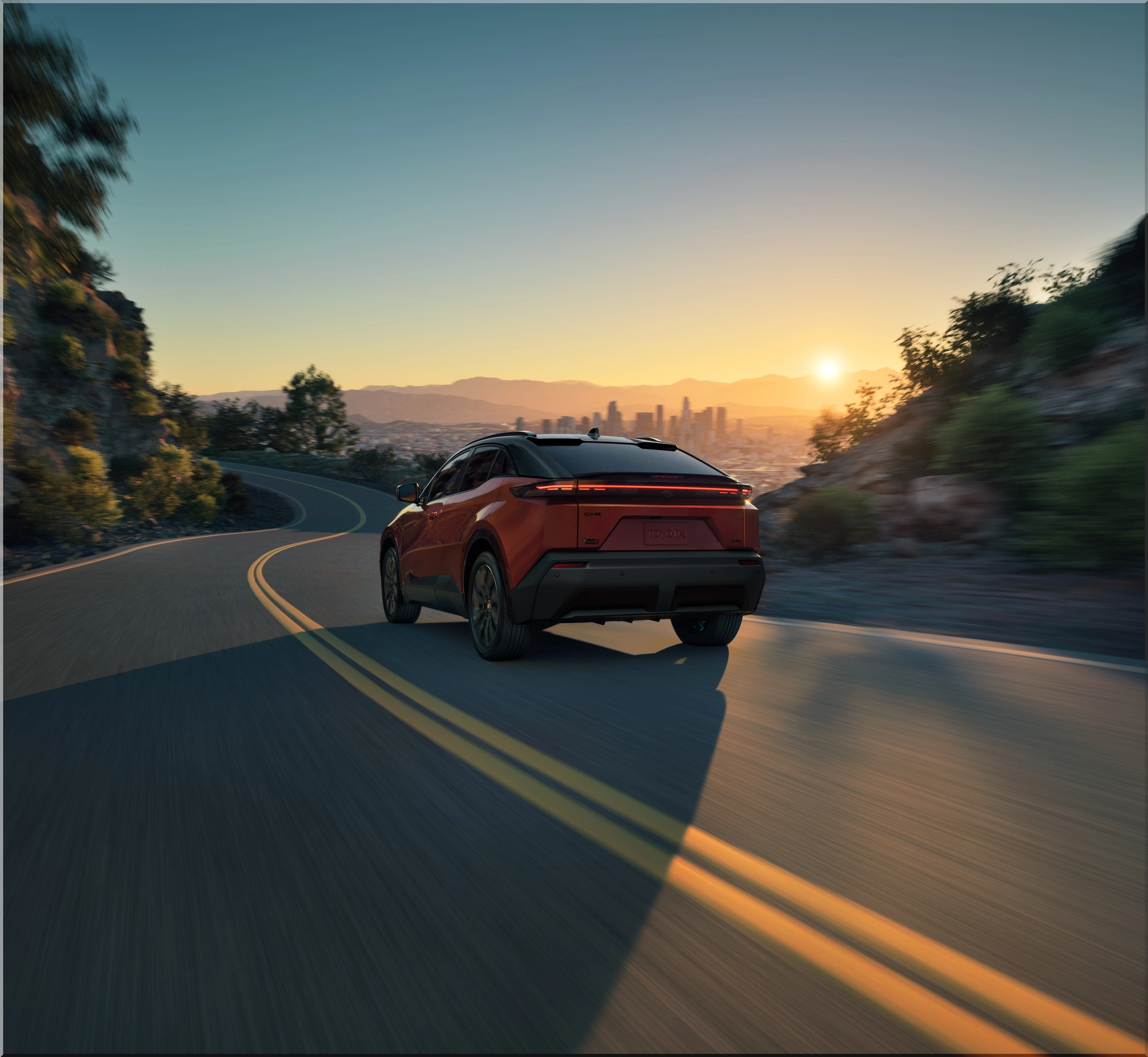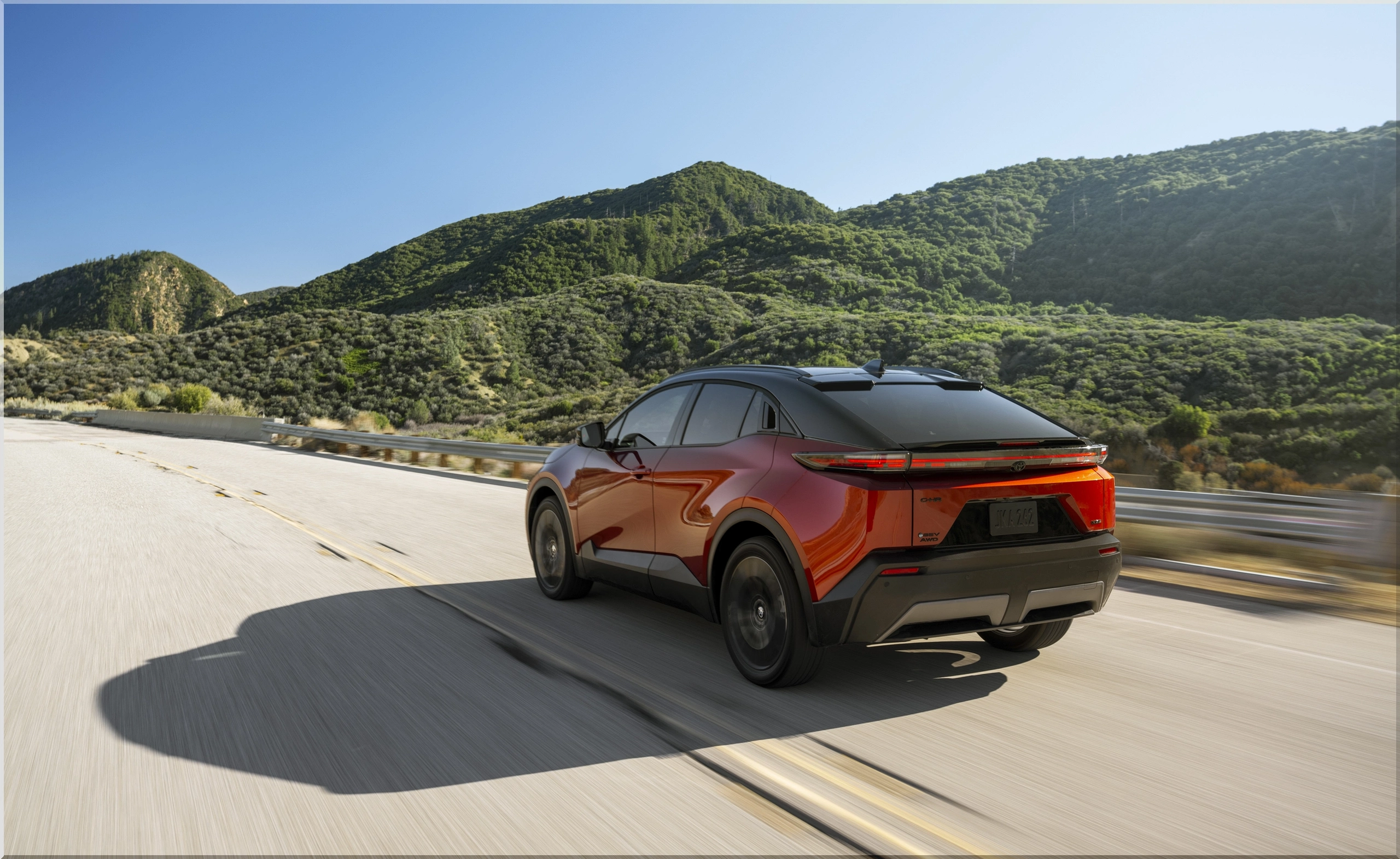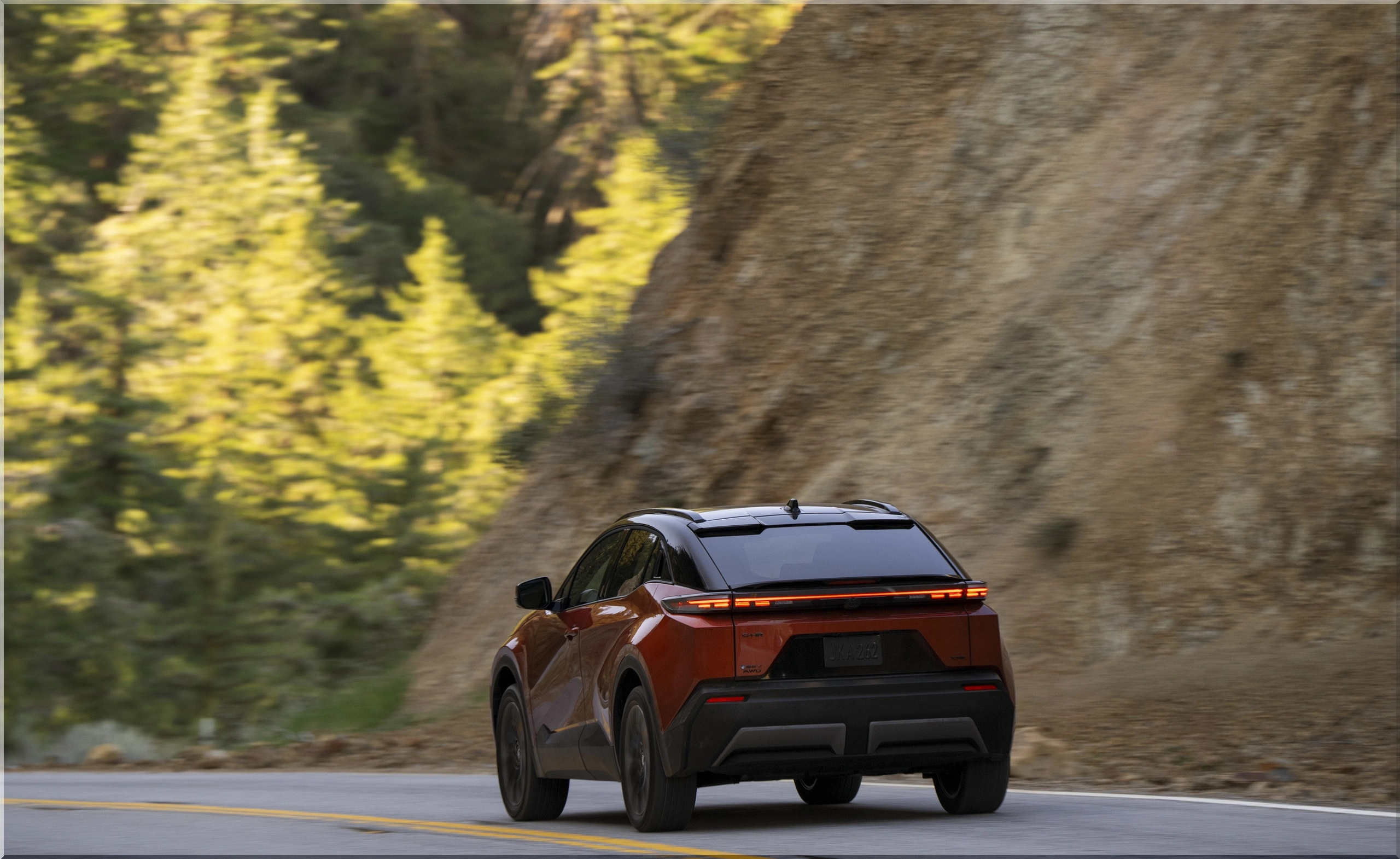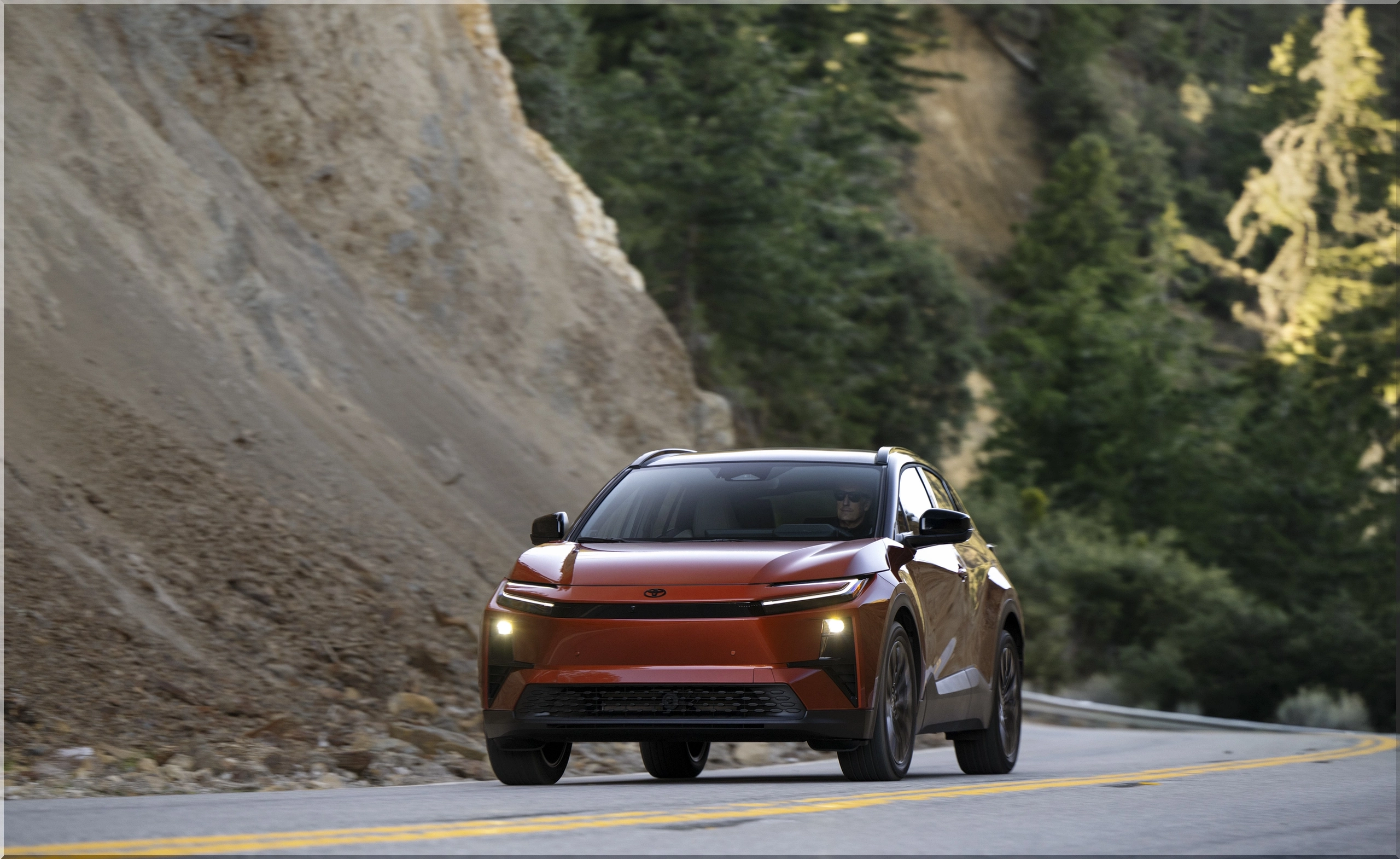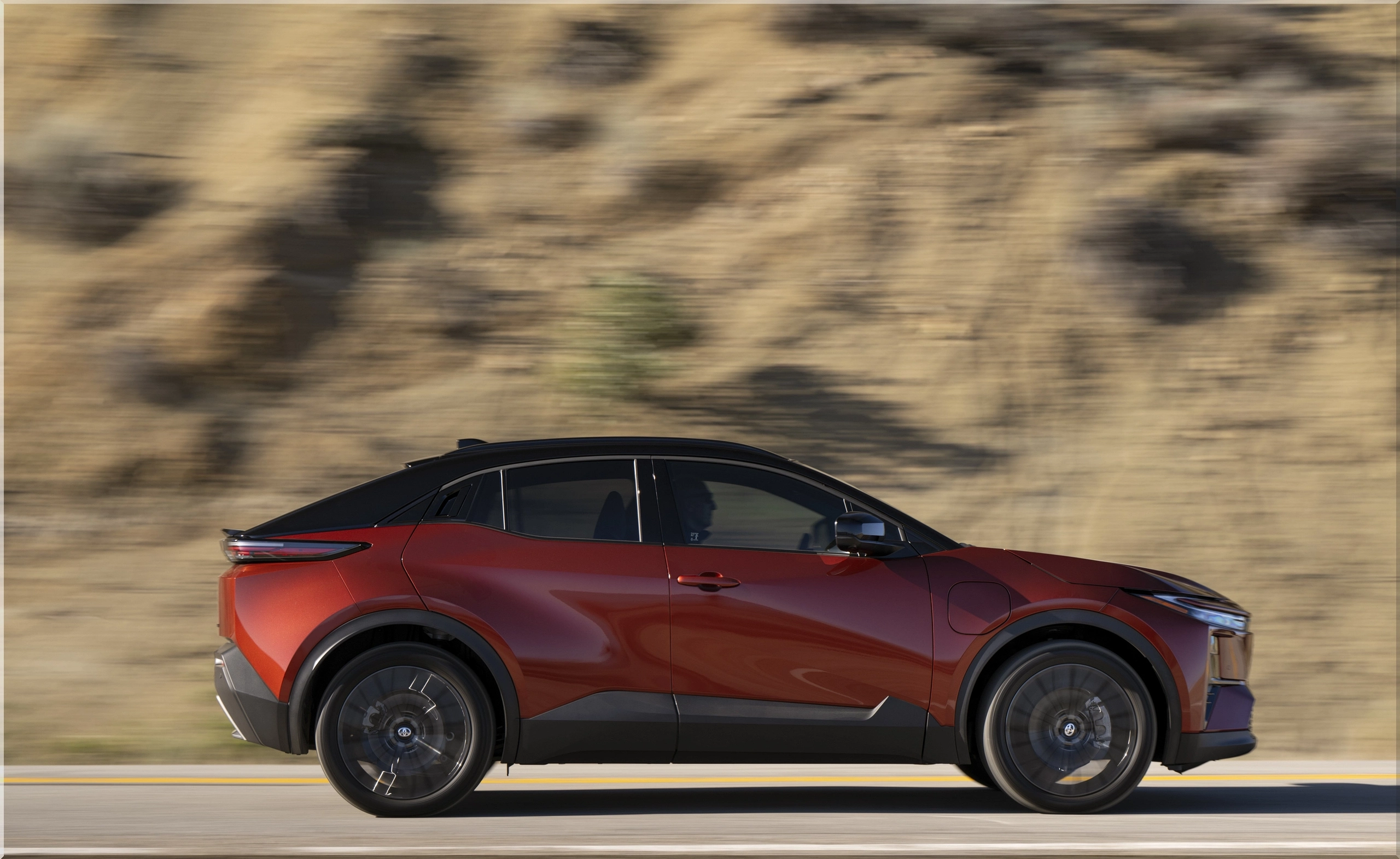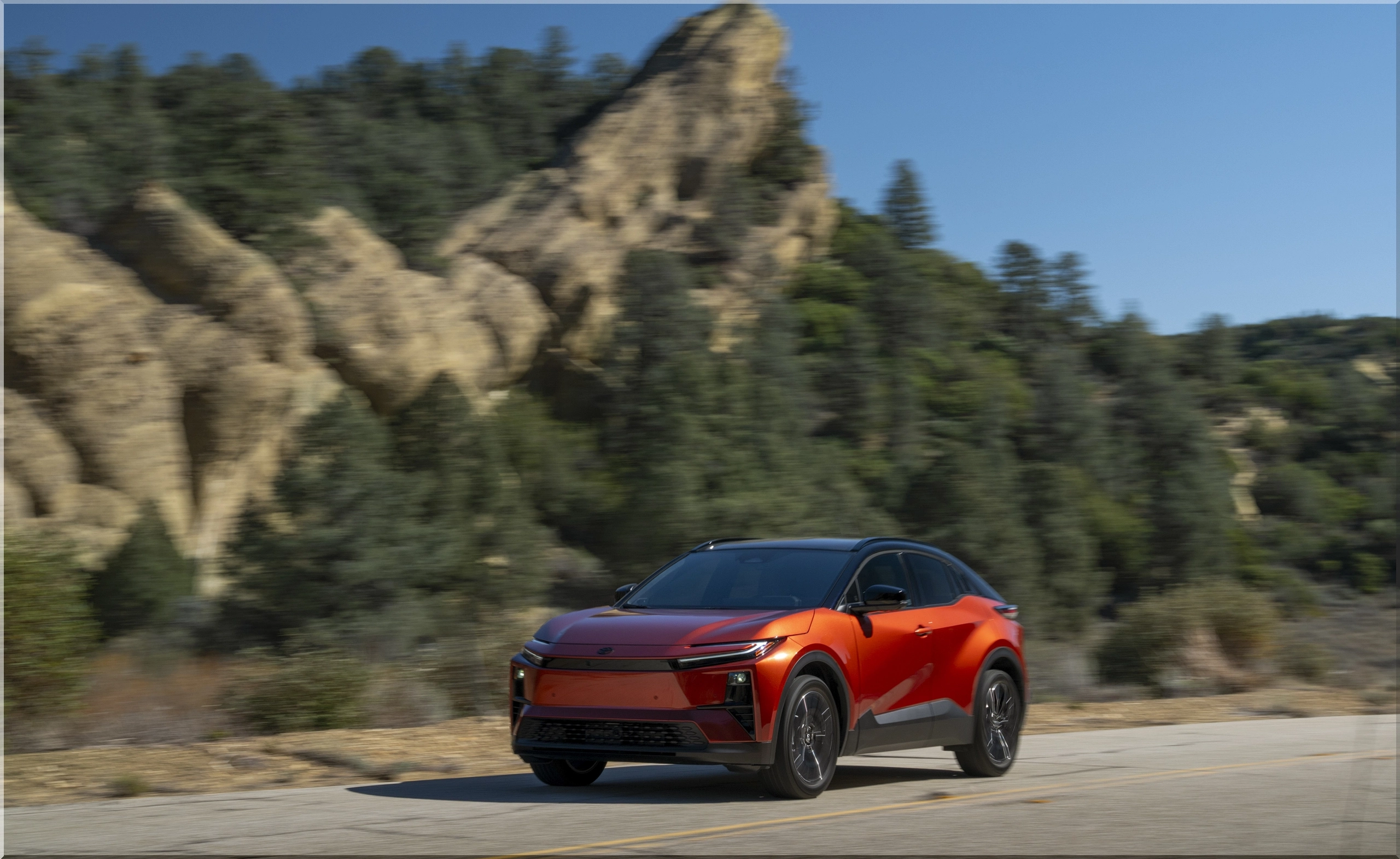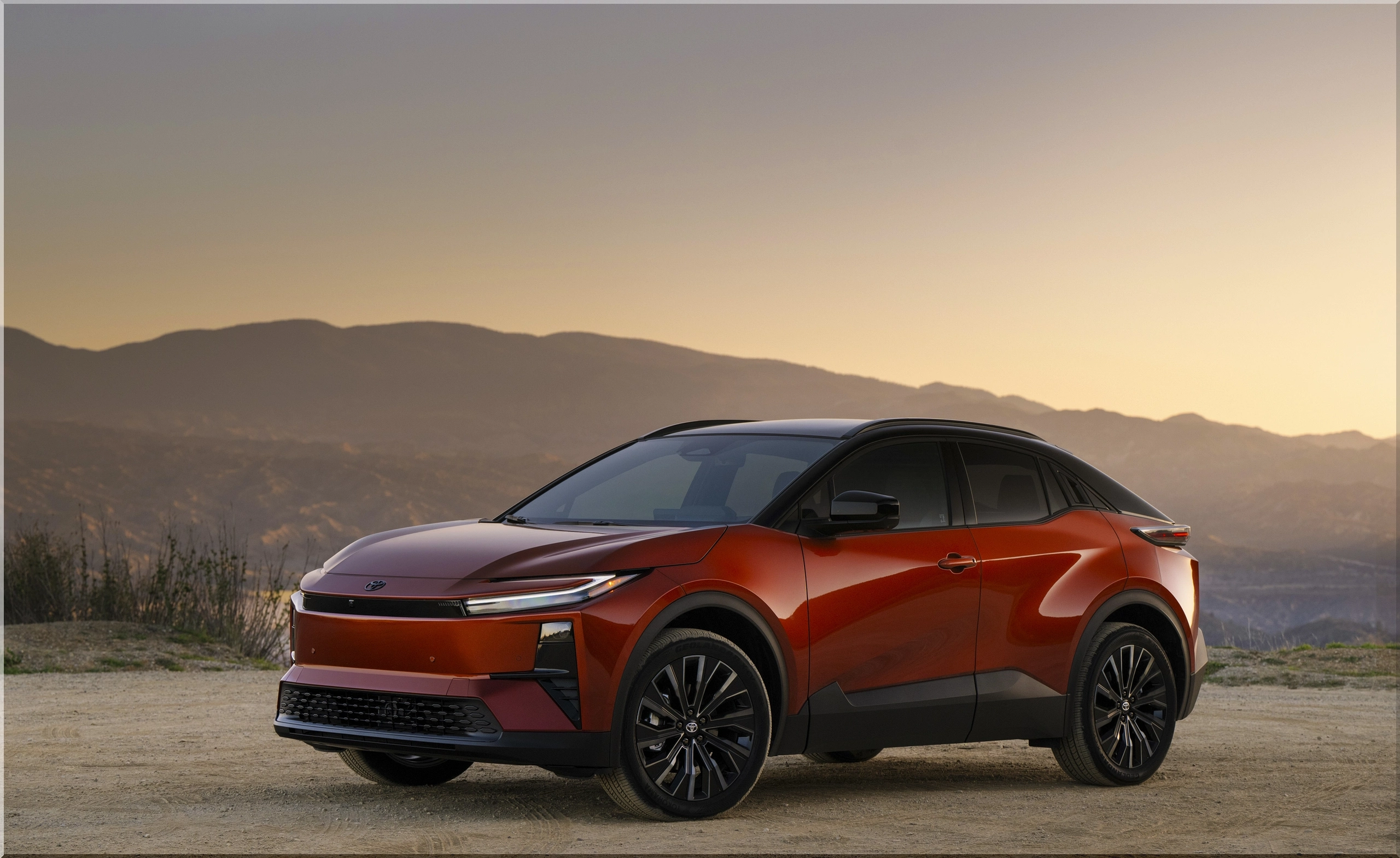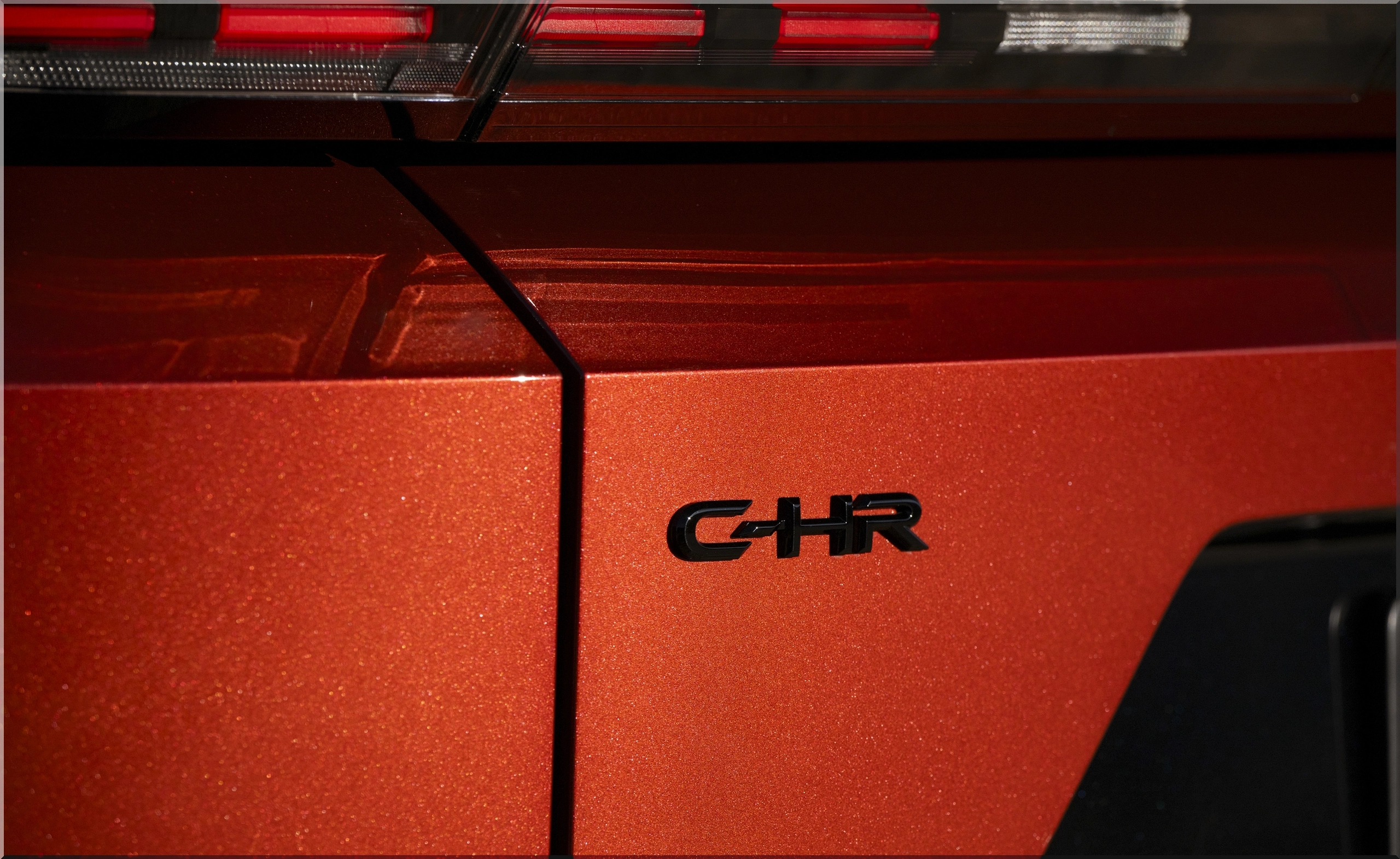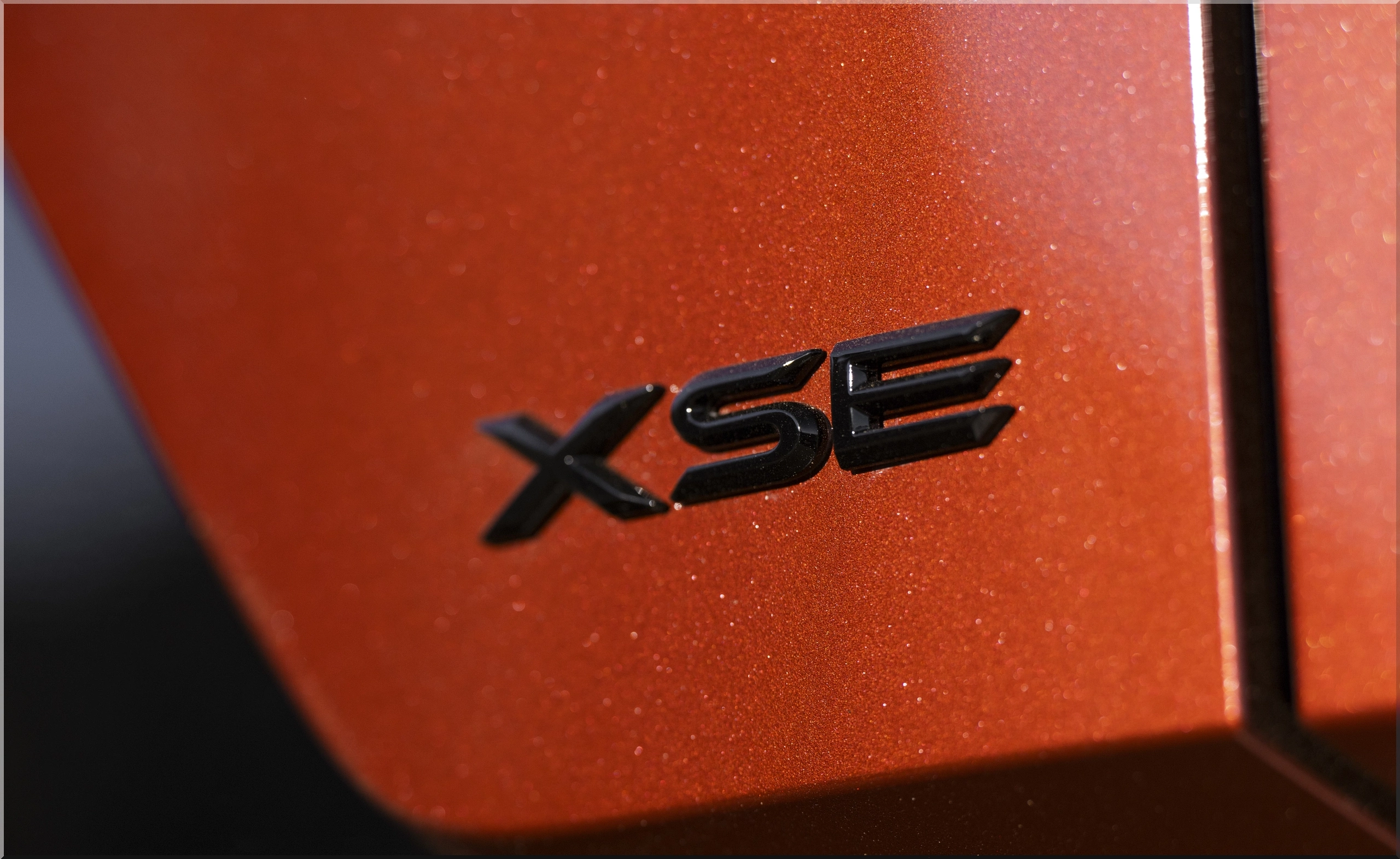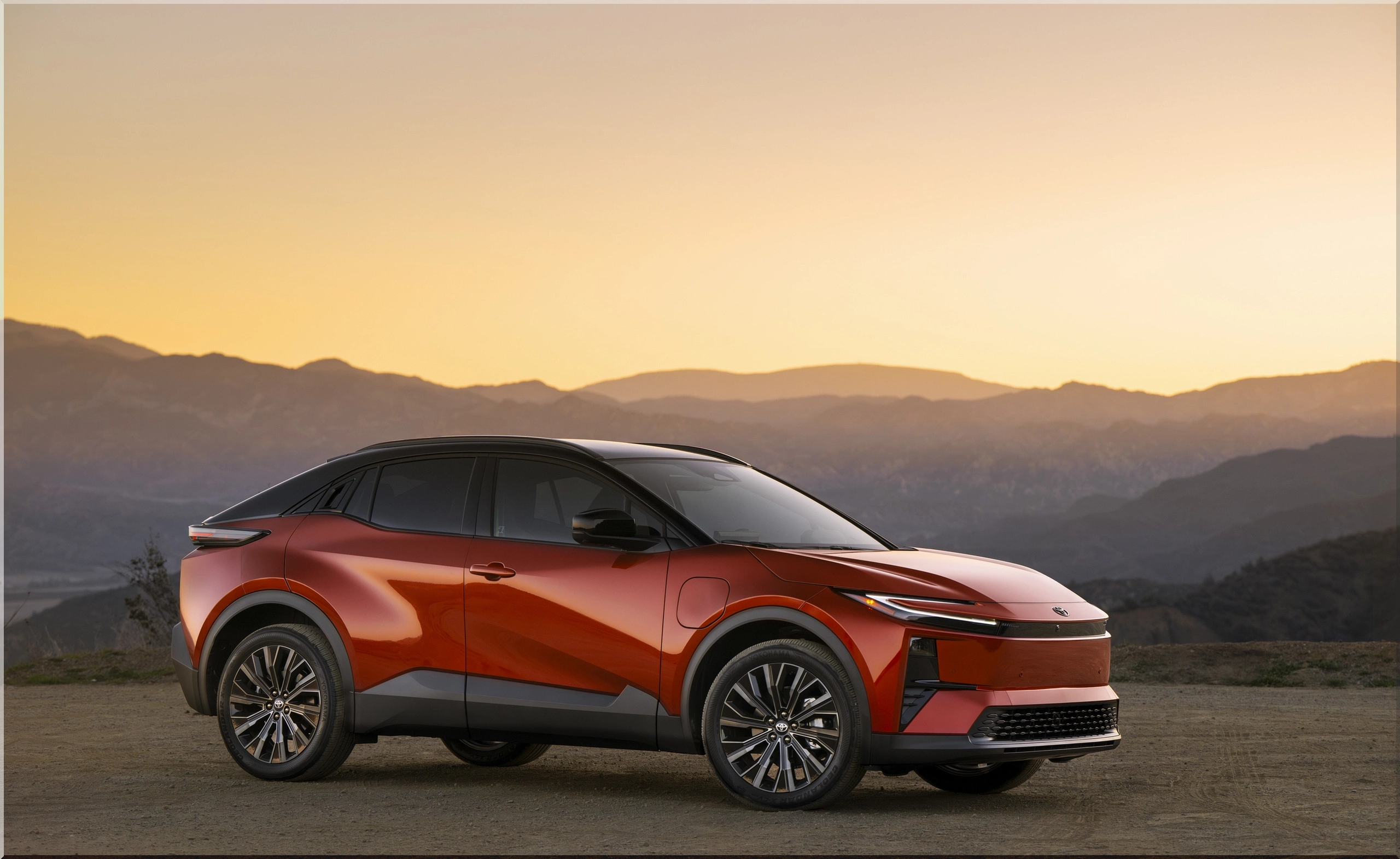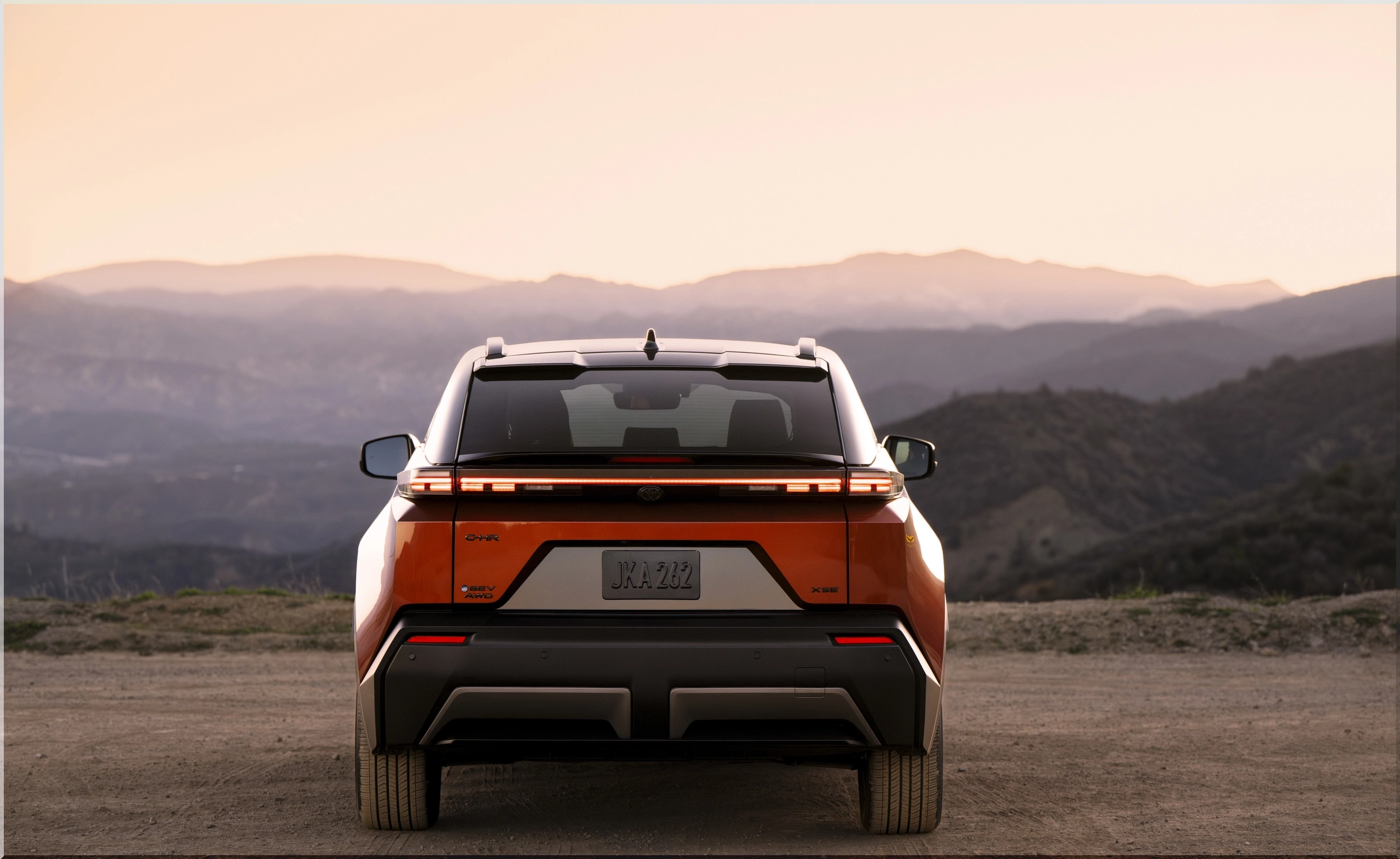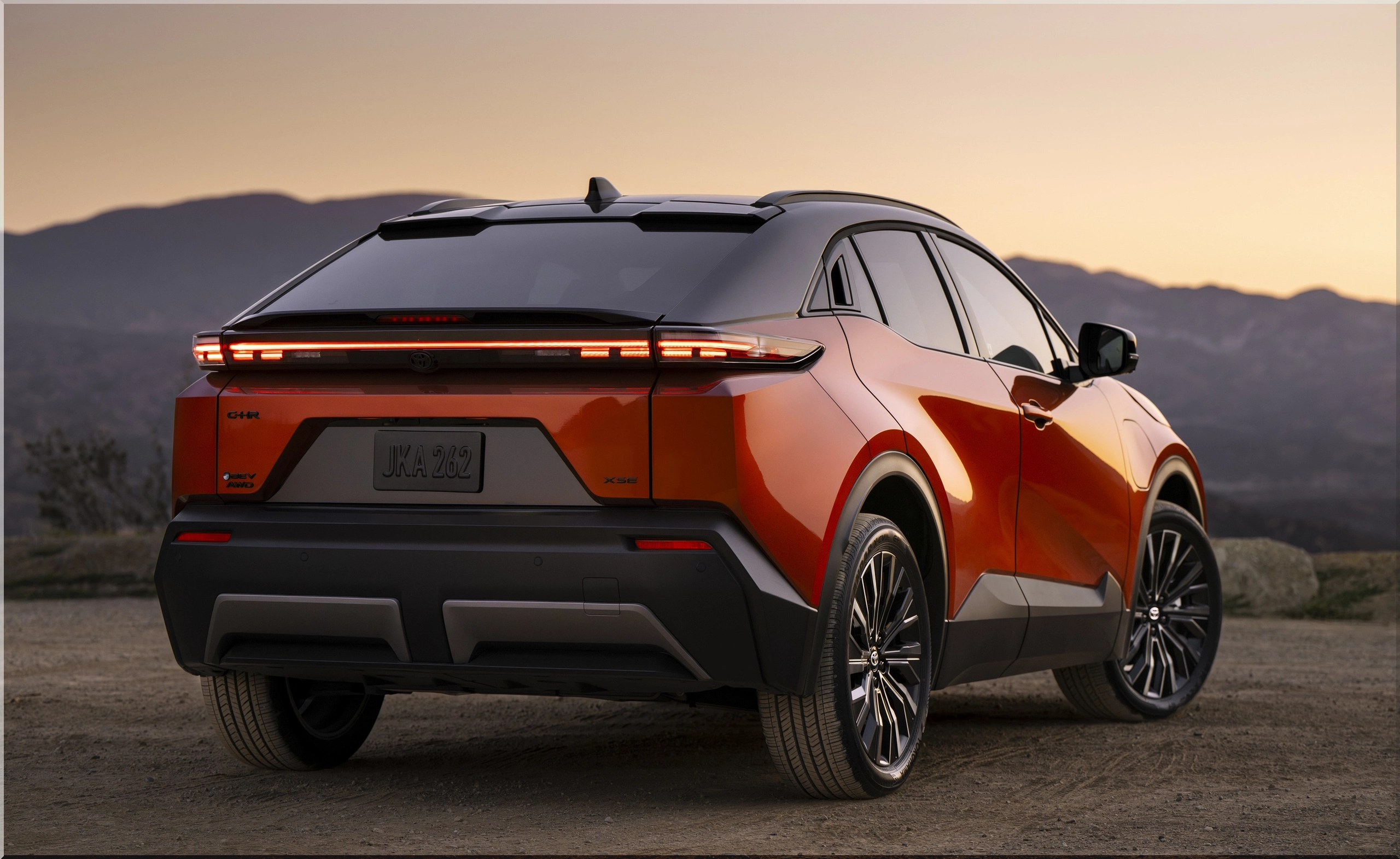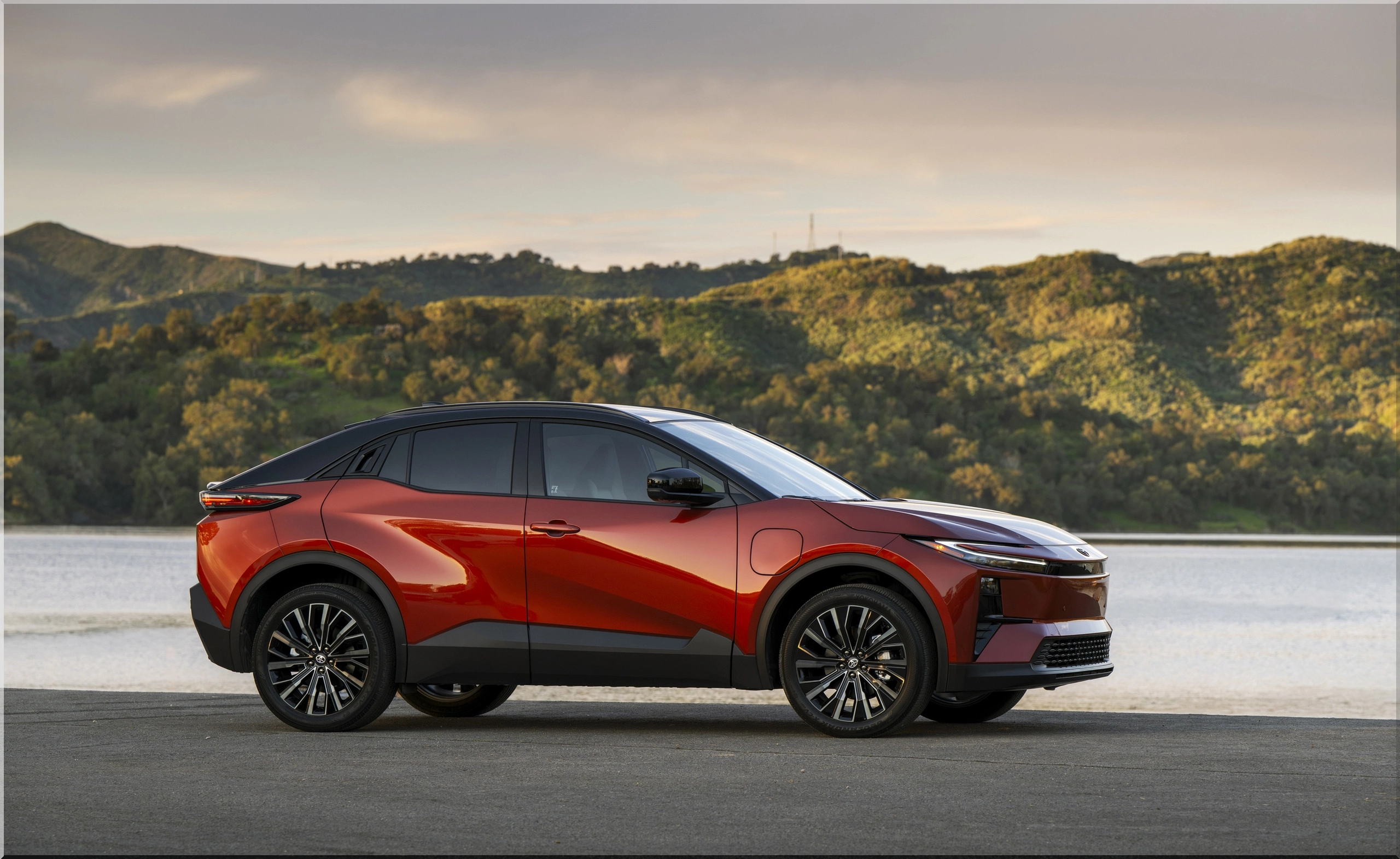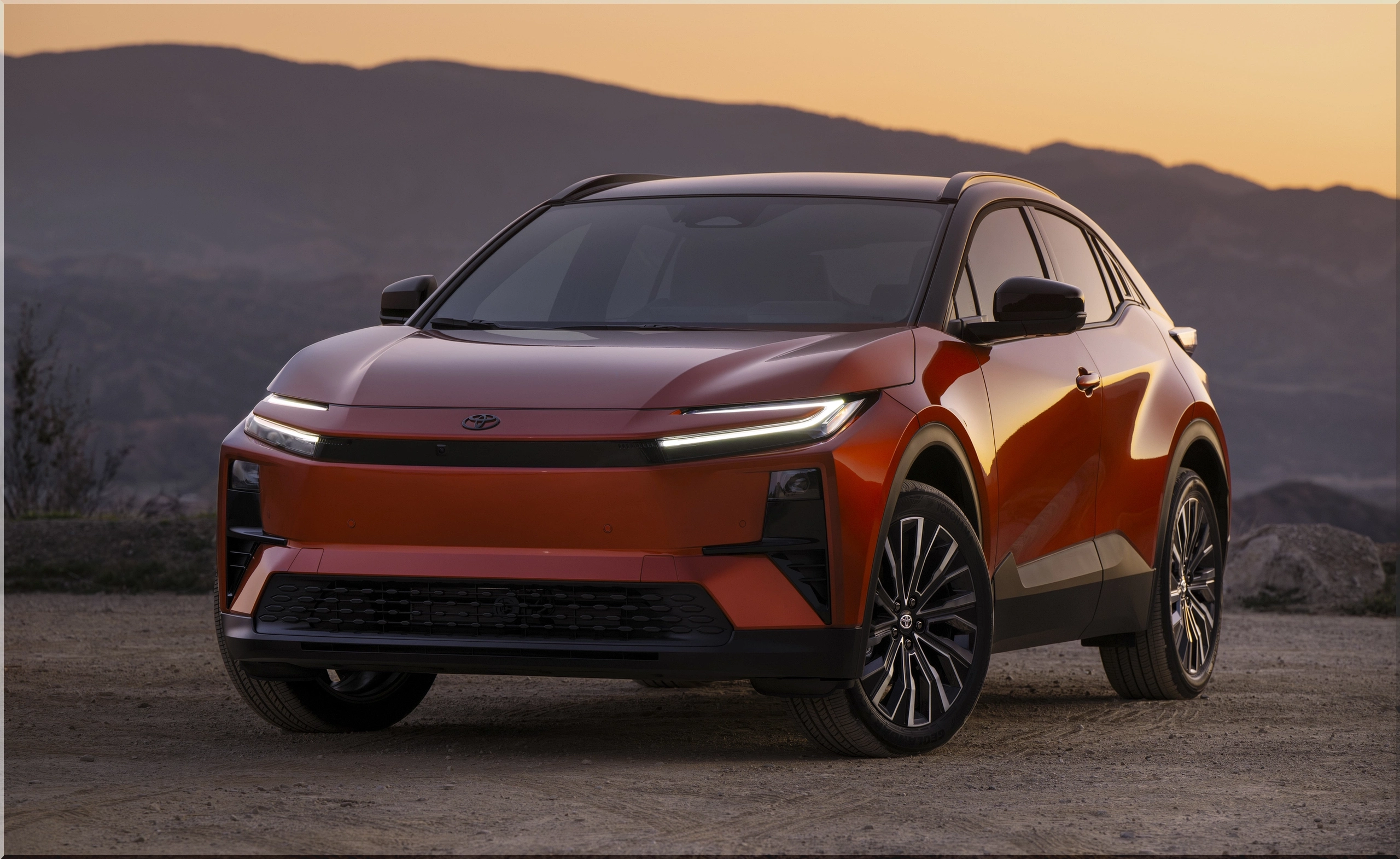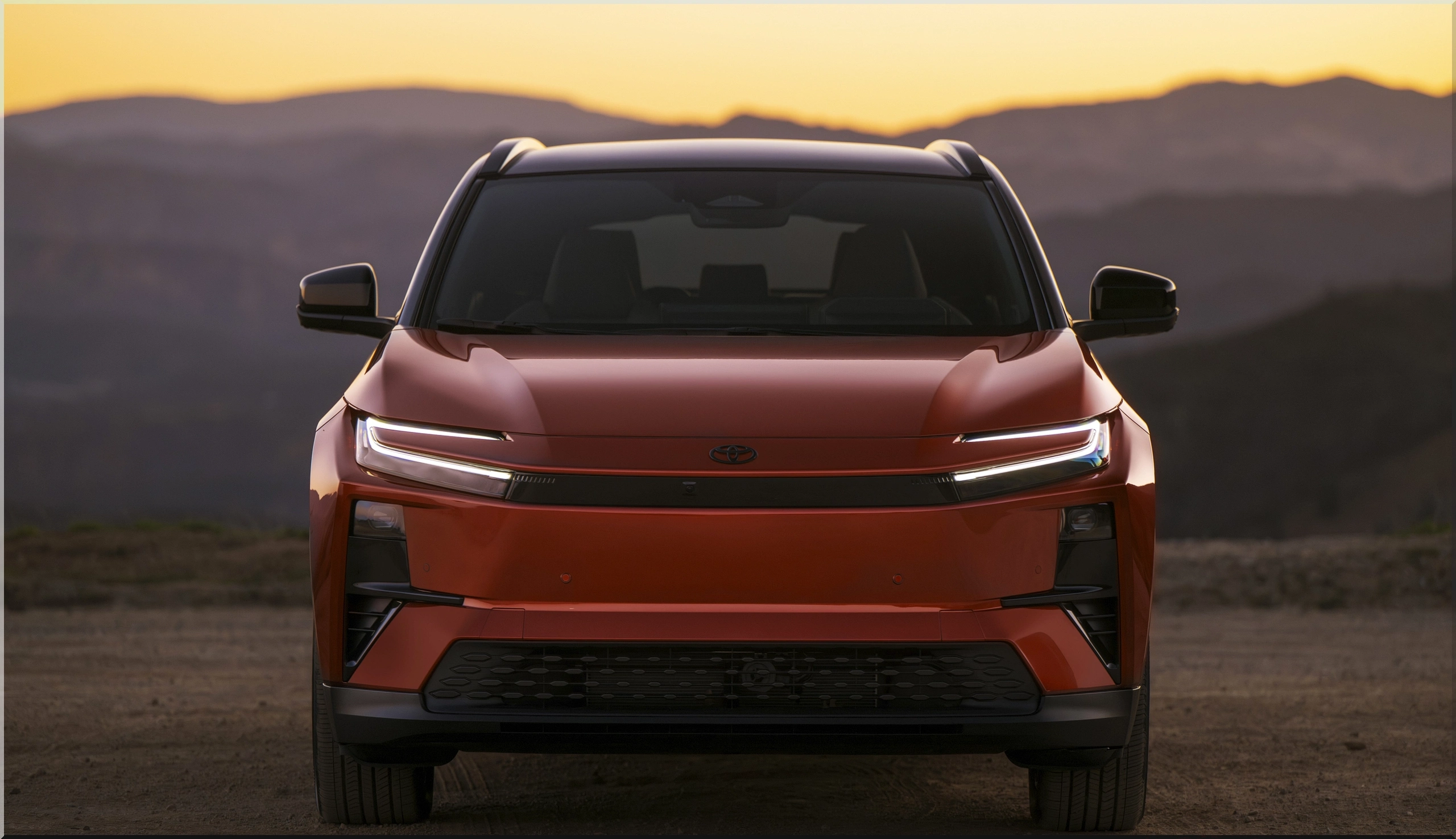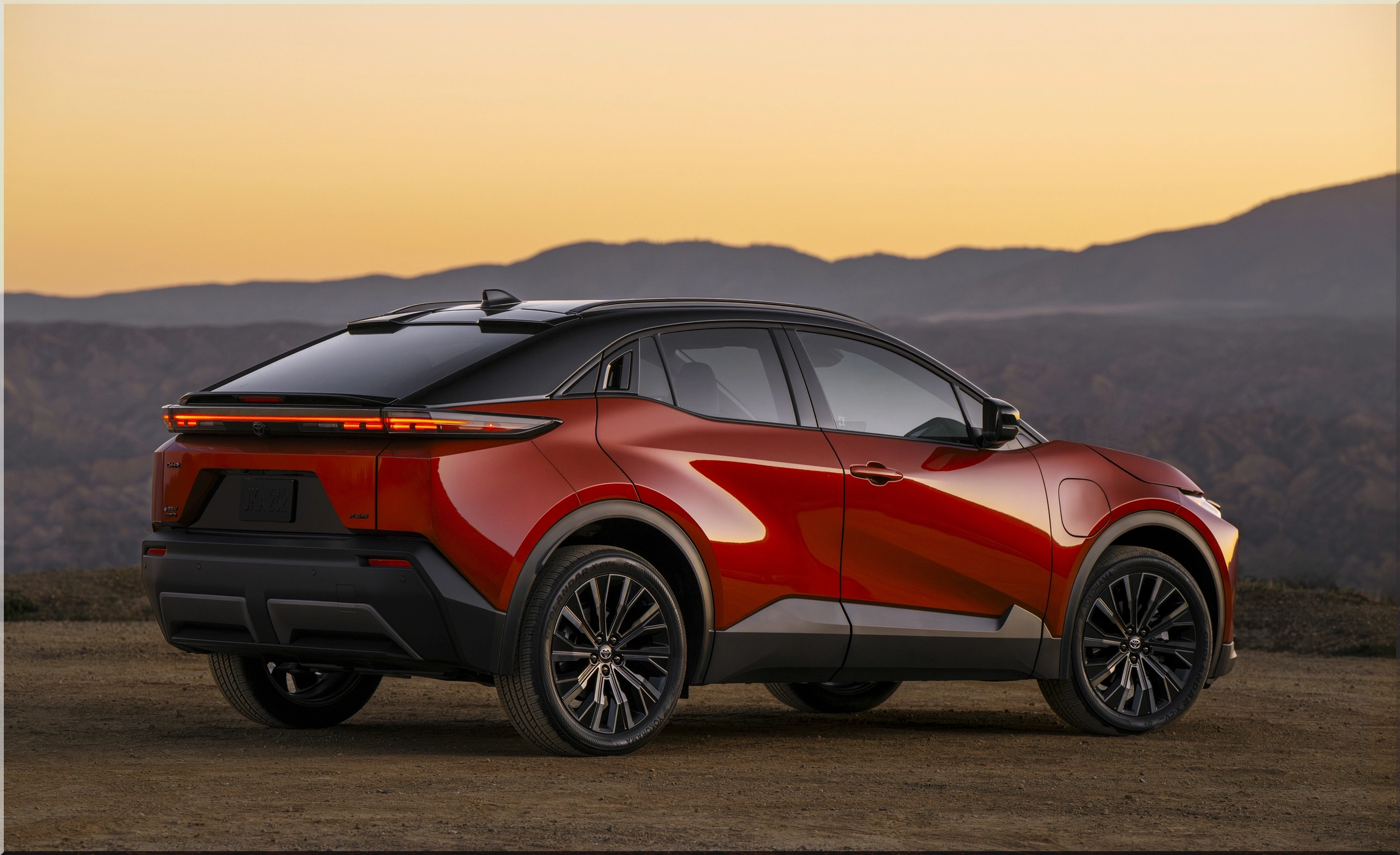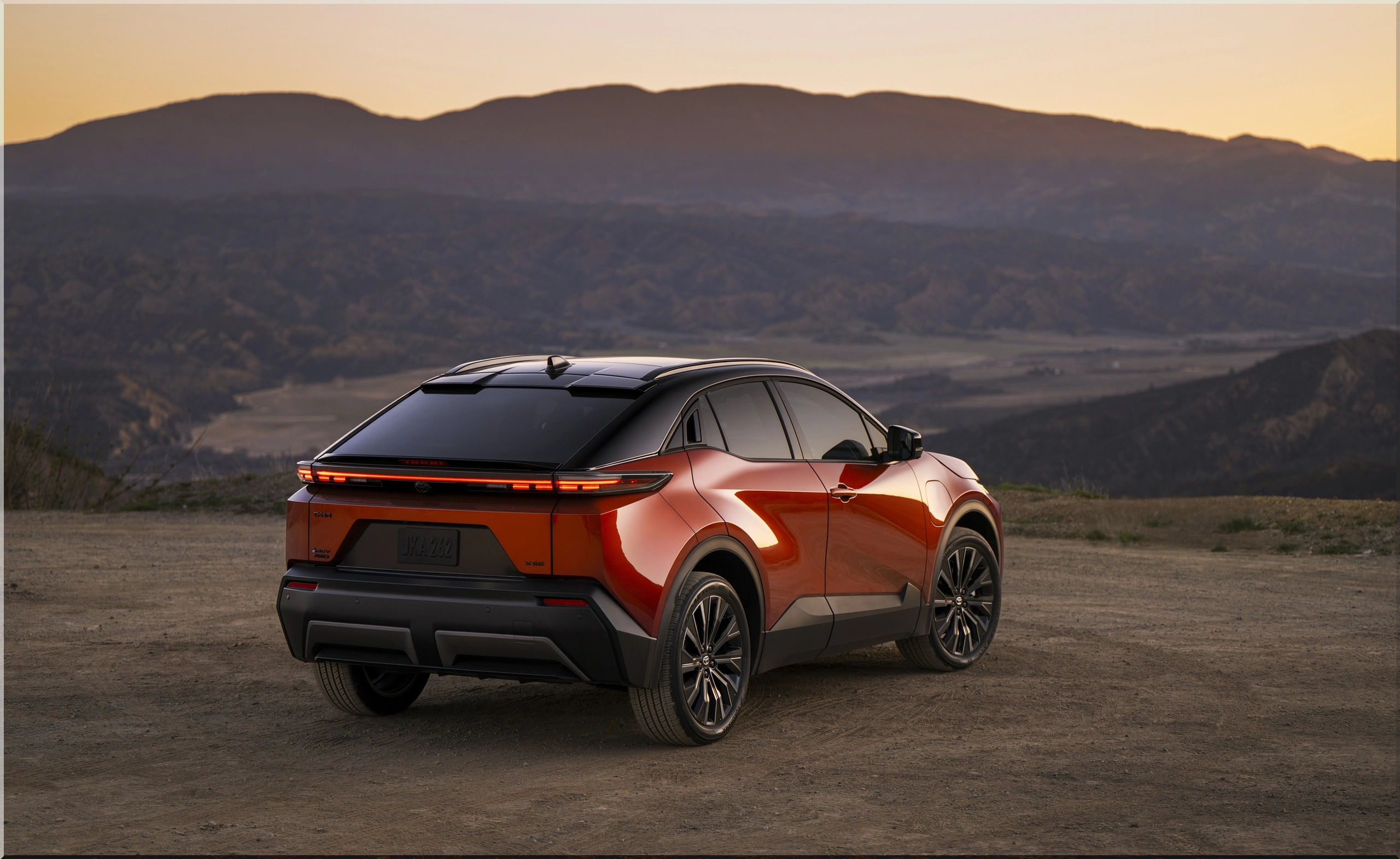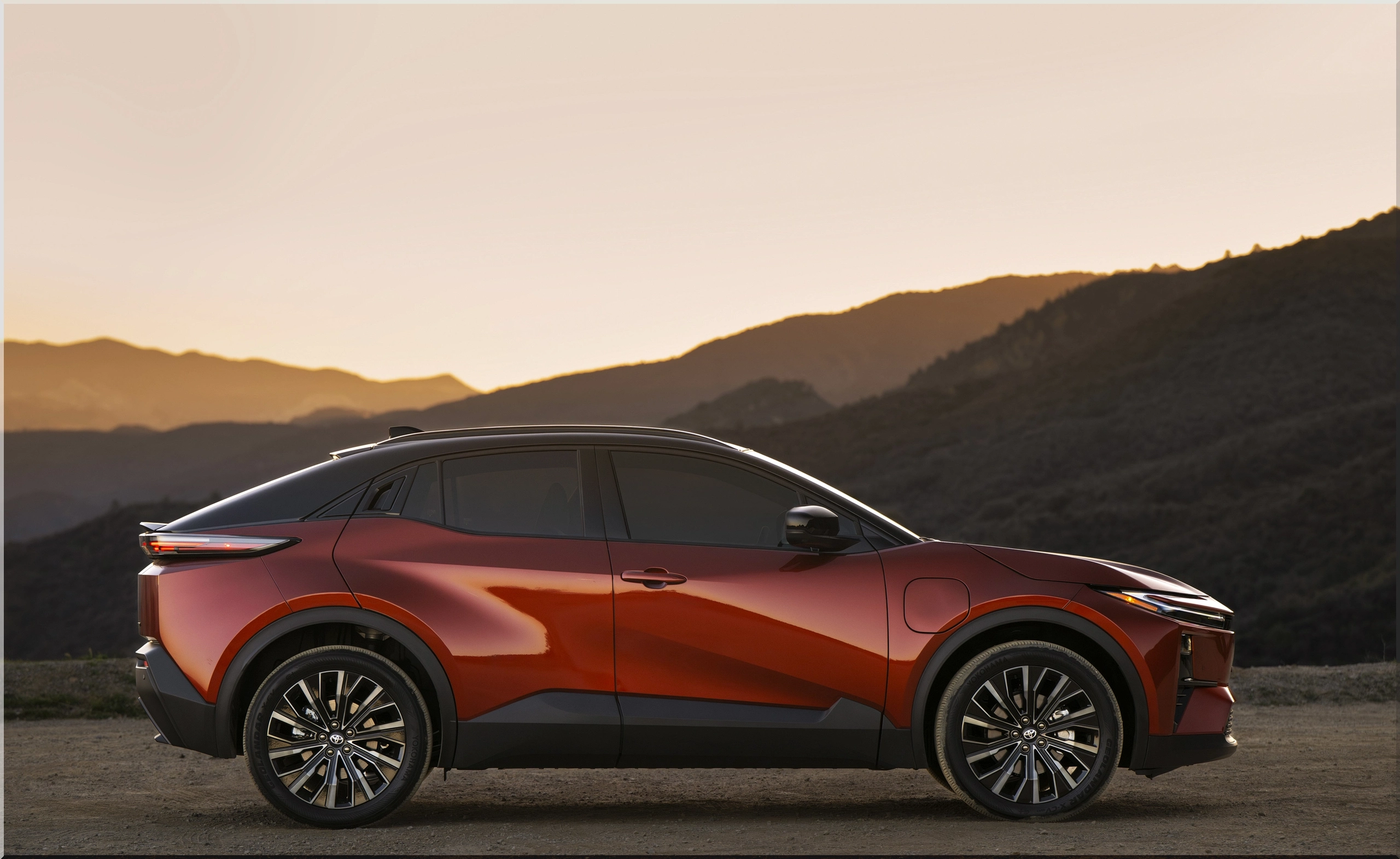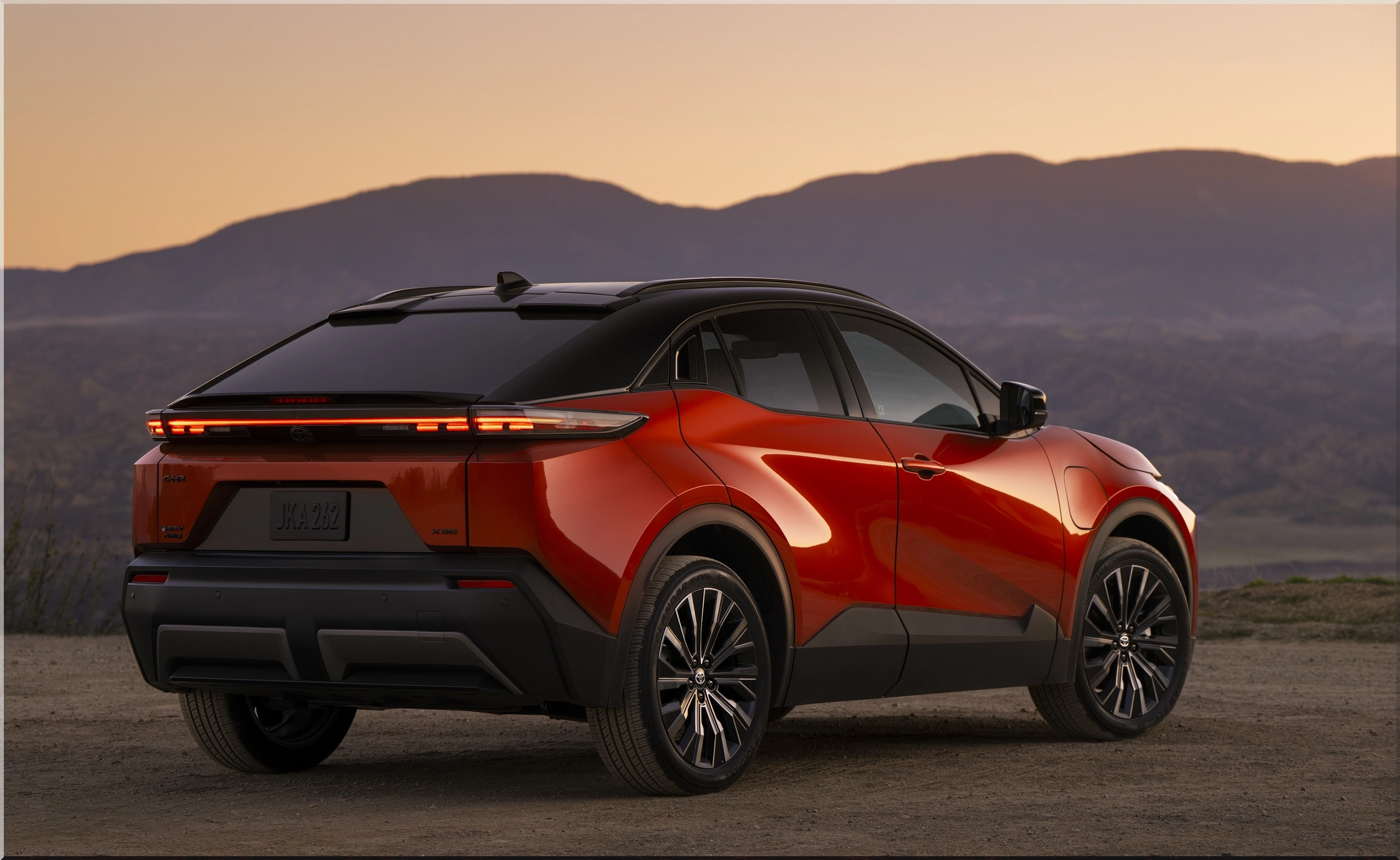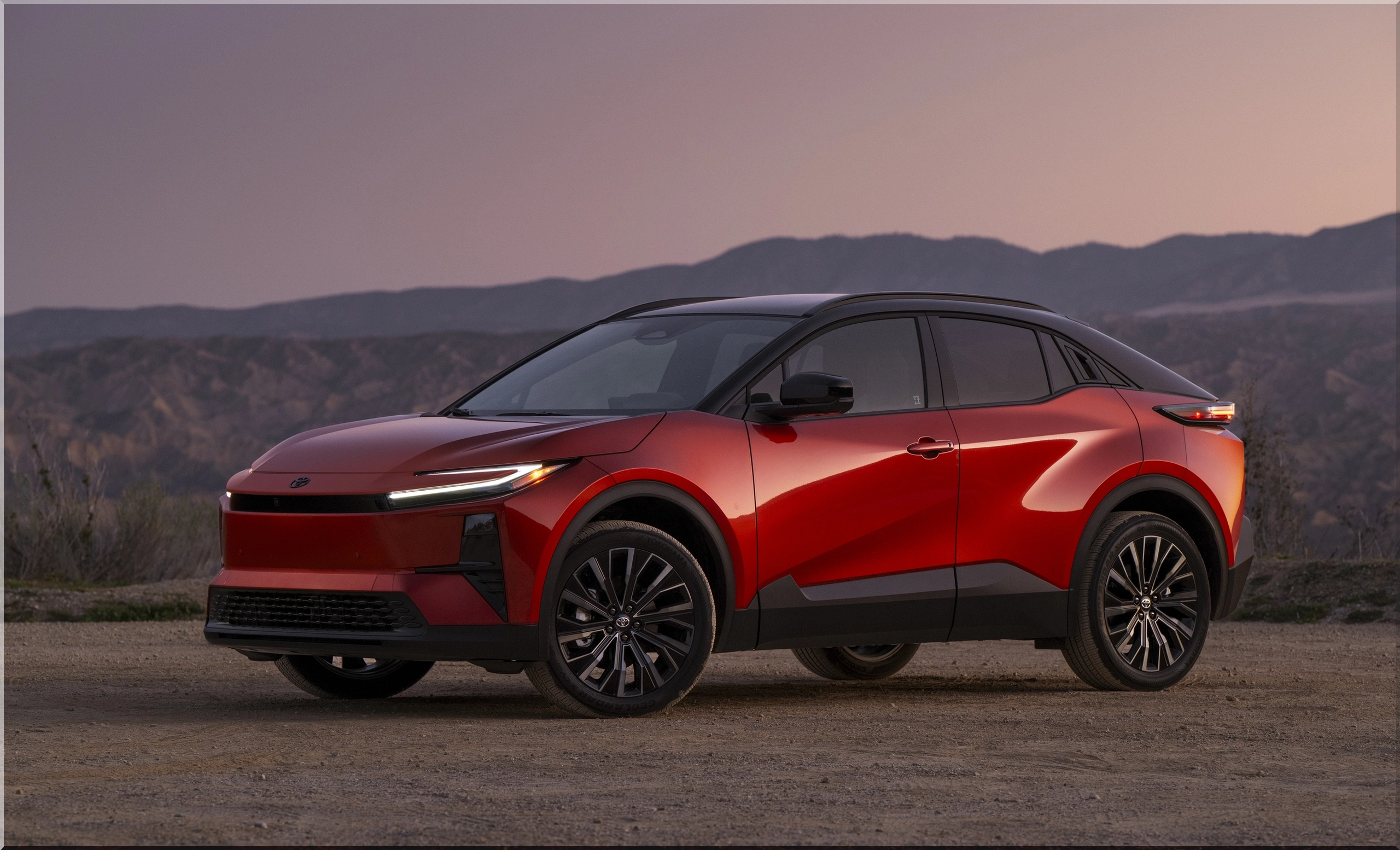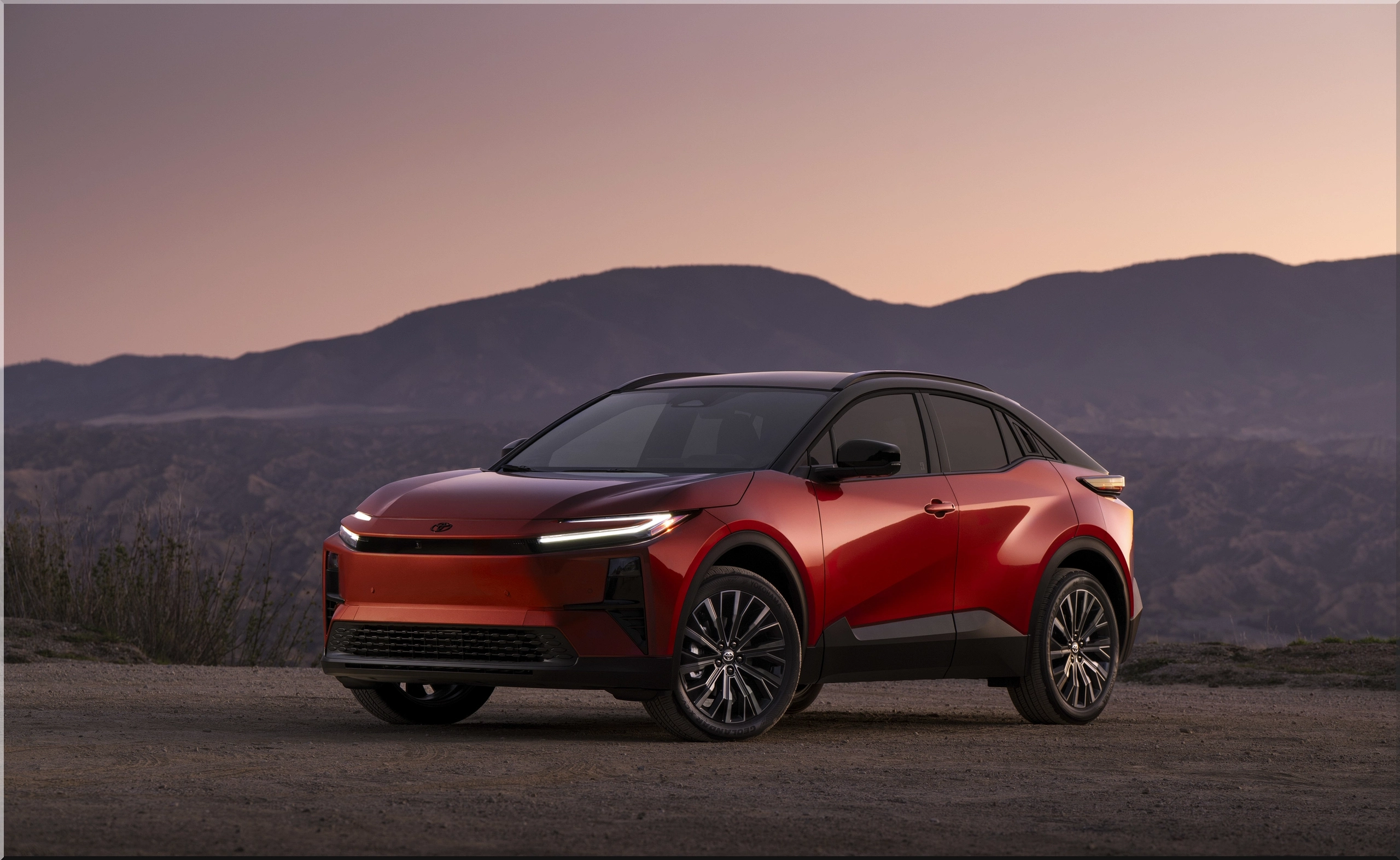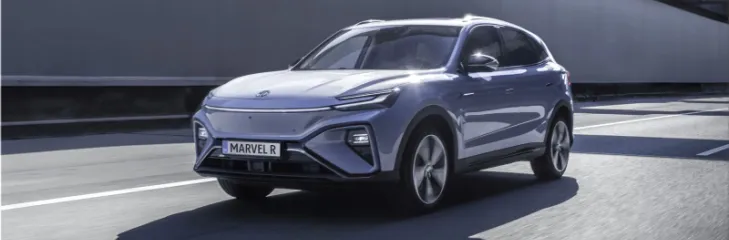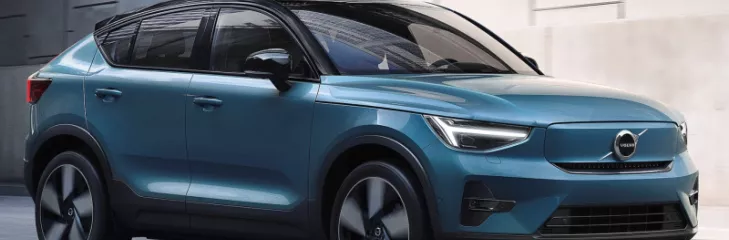



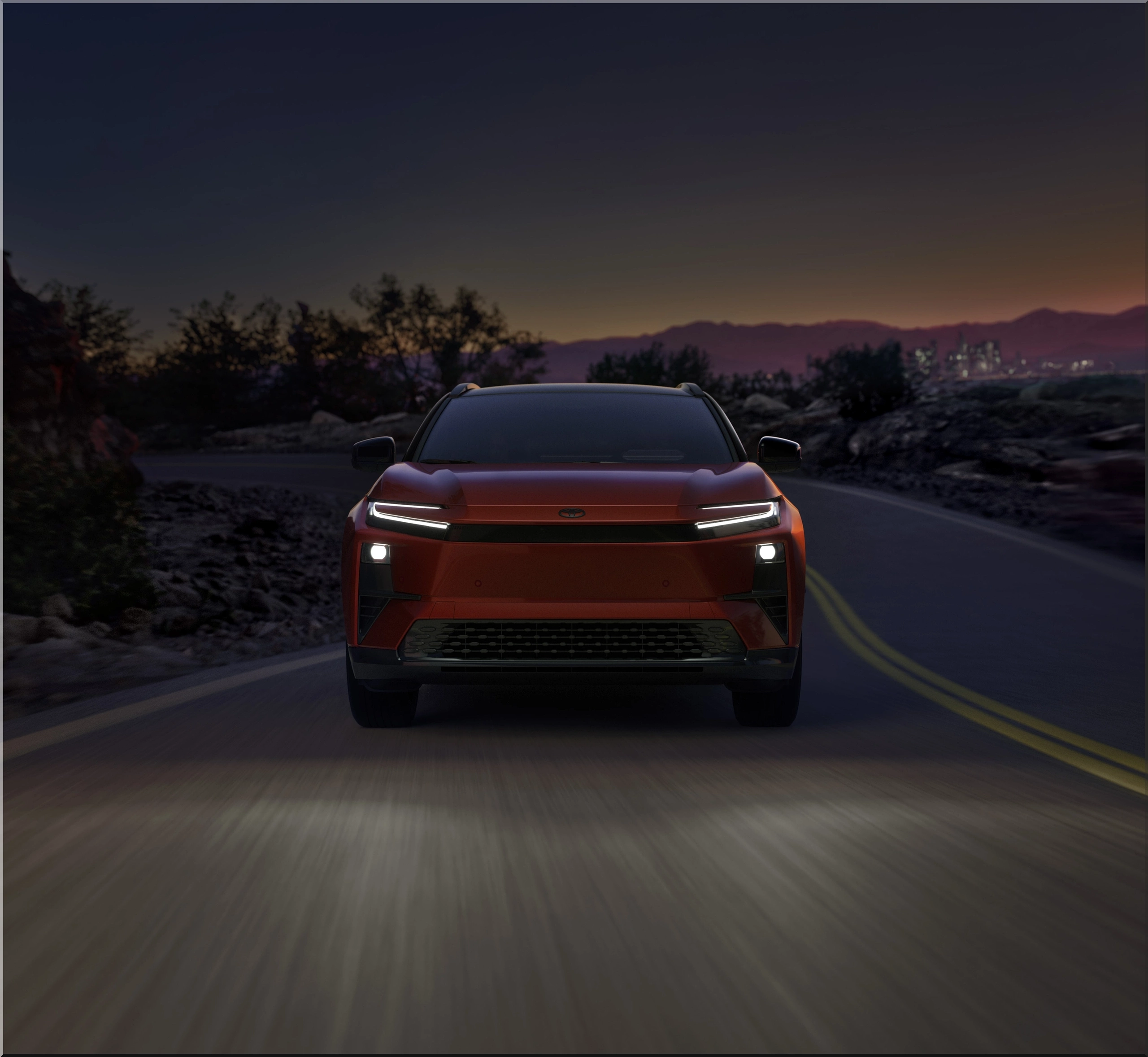
The 2027 Toyota C-HR returns as a compact electric SUV with 338 horsepower, standard all-wheel drive, and enough visual drama to make a parking garage feel slightly underdressed. Toyota quotes up to 287 miles of range for the SE trim, while the XSE trades some of that distance for larger wheels, richer cabin materials, and the timeless human desire to pay more for things that touch the road less.
The C-HR starts at $37,080 before dealer fees. That price places it near the lower end of quick all-wheel-drive electric SUVs, although the final transaction figure will depend on destination charges, incentives, taxes, and the dealer's creative interpretation of the word "processing."
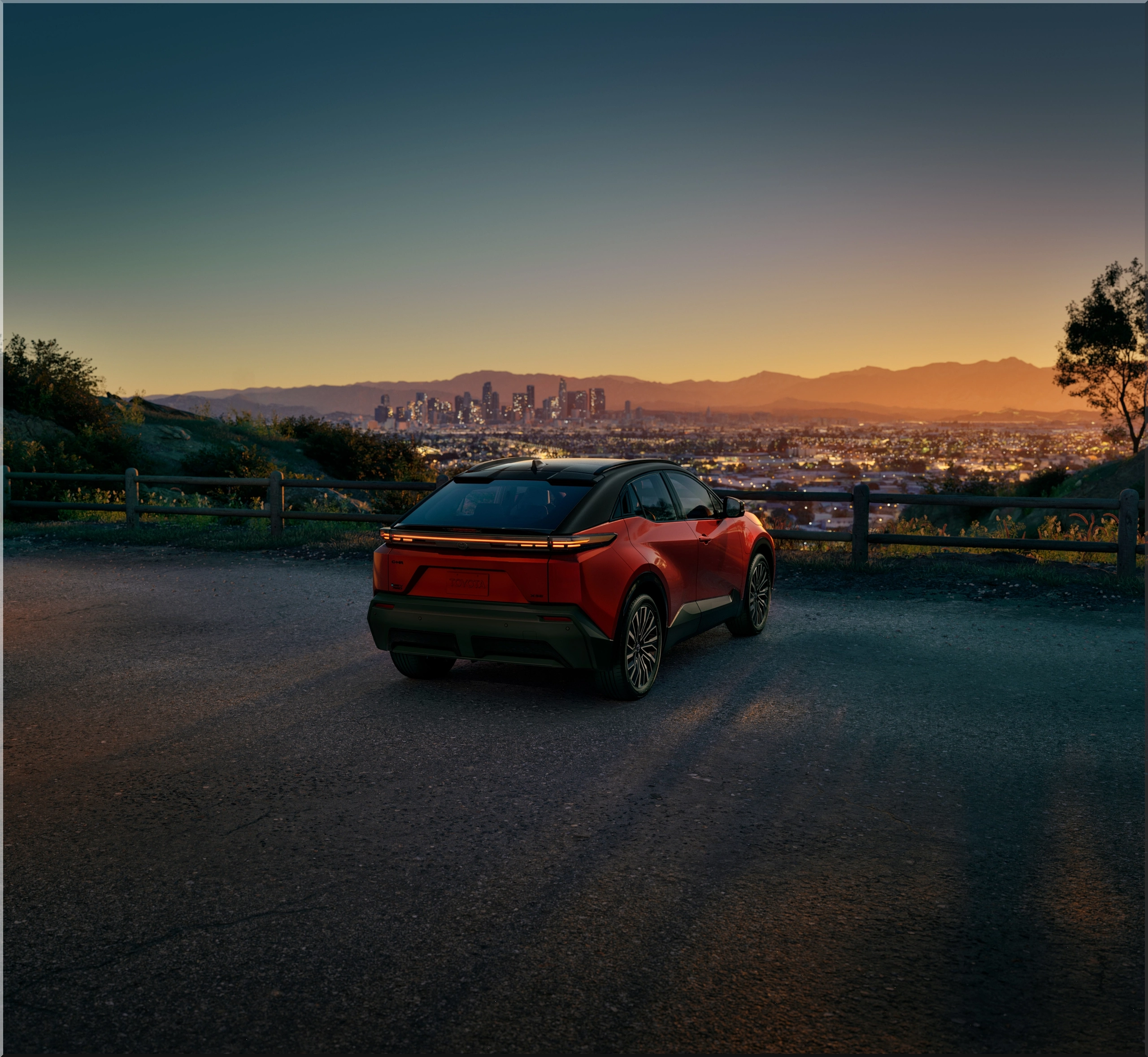
The C-HR Goes Fully Electric
Toyota gives every 2027 Toyota C-HR AWD two electric motors and electronic all-wheel drive. The front motor produces 198 lb-ft of torque, while the rear motor contributes 125 lb-ft. Together, the motors produce 338 net horsepower and a manufacturer-estimated 0-to-60-mph time of 4.9 seconds.
That output gives the C-HR a useful advantage over several front-wheel-drive electric crossovers. The rear motor can add traction when the front tires lose grip, and it can assist during hard acceleration without waiting for a transmission to select the correct gear. Electric motors already know what they want to do. They lack the patience required for a six-speed automatic.
2027 Toyota C-HR Powertrain Specifications
| Specification | C-HR SE | C-HR XSE |
|---|---|---|
| Powertrain | Dual electric motors | Dual electric motors |
| Drivetrain | Electronic AWD | Electronic AWD |
| Total output | 338 hp | 338 hp |
| Front motor torque | 198 lb-ft | 198 lb-ft |
| Rear motor torque | 125 lb-ft | 125 lb-ft |
| Battery capacity | 74.7 kWh | 74.7 kWh |
| Estimated range | 287 miles | 273 miles |
| Estimated 0-60 mph | 4.9 seconds | 4.9 seconds |
| Onboard AC charger | 11 kW | 11 kW |
The C-HR uses a 74.7-kWh lithium-ion battery mounted beneath the cabin. That location lowers the center of gravity and gives the chassis a solid foundation, while the battery enclosure adds stiffness between the axles. Engineers gain useful control over body movement, and passengers gain a floor that sits higher than it would in a conventional gasoline hatchback. Physics sends an invoice for every advantage.
Toyota adds four regenerative-braking settings controlled through steering-wheel paddles. Stronger regeneration allows the electric motors to recover more energy during deceleration and reduces brake-pedal use in traffic. Lighter settings give the vehicle a gentler coasting response for drivers who prefer their car to stop acting like a science project every time they lift the accelerator.
Range, Charging, and Battery Details
The Toyota C-HR EV range reaches 287 miles in SE trim. The XSE reaches 273 miles, losing 14 miles because its 20-inch wheels carry greater mass and create more rolling resistance than the SE's 18-inch wheels.
That 14-mile difference equals about 4.9% of the SE's estimated range. Buyers who regularly cover long distances should treat the SE as the practical choice. Buyers who spend most of their week traveling from home to work and back may decide that larger wheels justify the small range penalty. Tires, as usual, remain willing to accept money in exchange for appearing confident.
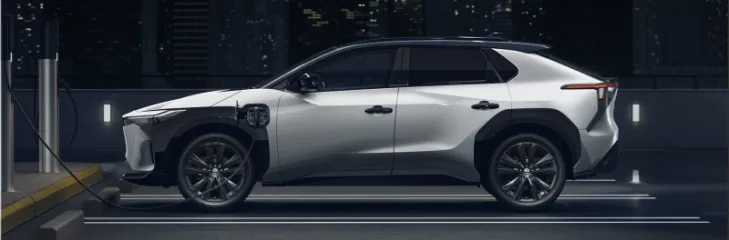
The C-HR supports Level 1, Level 2, and DC fast charging. Its 11-kW onboard charger allows efficient home charging with a suitable 240-volt installation. Toyota estimates that DC fast charging can replenish the battery from 10% to 80% in approximately 30 minutes under favorable conditions.
Charging Features
- NACS charge port for access to compatible fast-charging networks.
- Battery preconditioning before selected DC fast-charge stops.
- Plug and Charge capability at supported stations.
- Toyota app controls for charging status and remote functions.
- Dual-voltage charging cable for 120-volt and 240-volt outlets.
- Estimated 10% to 80% DC fast charging in about 30 minutes.
Charging times will change with battery temperature, charger output, station traffic, and the condition of the individual charging unit. The word "fast" describes the charger, not the experience of locating one during a holiday weekend.
Pro-Tips for Better EV Ownership
- Select the SE if maximum range and lower tire costs rank first.
- Set the DC fast charger as the navigation destination so the battery can precondition.
- Use Level 2 charging for routine use and reserve DC charging for longer trips.
- Keep daily charging below 100% when a full battery offers no practical benefit.
- Check network compatibility before depending on Plug and Charge.
Dimensions and Cargo Capacity
The 2027 C-HR measures 177.9 inches long, 73.6 inches wide, and 63.8 inches tall. In metric terms, that equals approximately 4,518 mm long, 1,869 mm wide, and 1,621 mm tall. The 108.3-inch wheelbase measures about 2,751 mm.
The dimensions place the C-HR in the compact electric SUV class. It occupies less pavement than larger electric crossovers but still provides enough interior volume for daily errands, airport runs, and the occasional purchase that seemed smaller inside the store.
| Measurement | 2027 Toyota C-HR |
|---|---|
| Length | 177.9 in / 4,518 mm |
| Width | 73.6 in / 1,869 mm |
| Height | 63.8 in / 1,621 mm |
| Wheelbase | 108.3 in / 2,751 mm |
| Cargo behind rear seats | 25.3 cu. ft. |
| Maximum cargo volume | 59.5 cu. ft. |
| Rear seatback | 60/40 split |
| AC power outlet | 1,500 watts |
The C-HR provides 25.3 cubic feet behind the rear seats and 59.5 cubic feet with the 60/40 split seats folded. That gives it useful room for luggage, grocery bags, small furniture, and the boxes that arrive after an online purchase that looked much smaller on a screen.
Toyota also offers a 1,500-watt AC outlet. The outlet can support selected camping equipment, tools, and emergency devices, although owners should keep total electrical demand below the rated limit. A portable refrigerator and a small television may coexist peacefully. A refrigerator, television, hair dryer, and ambitious espresso machine may begin negotiations.
Cabin Technology and Safety
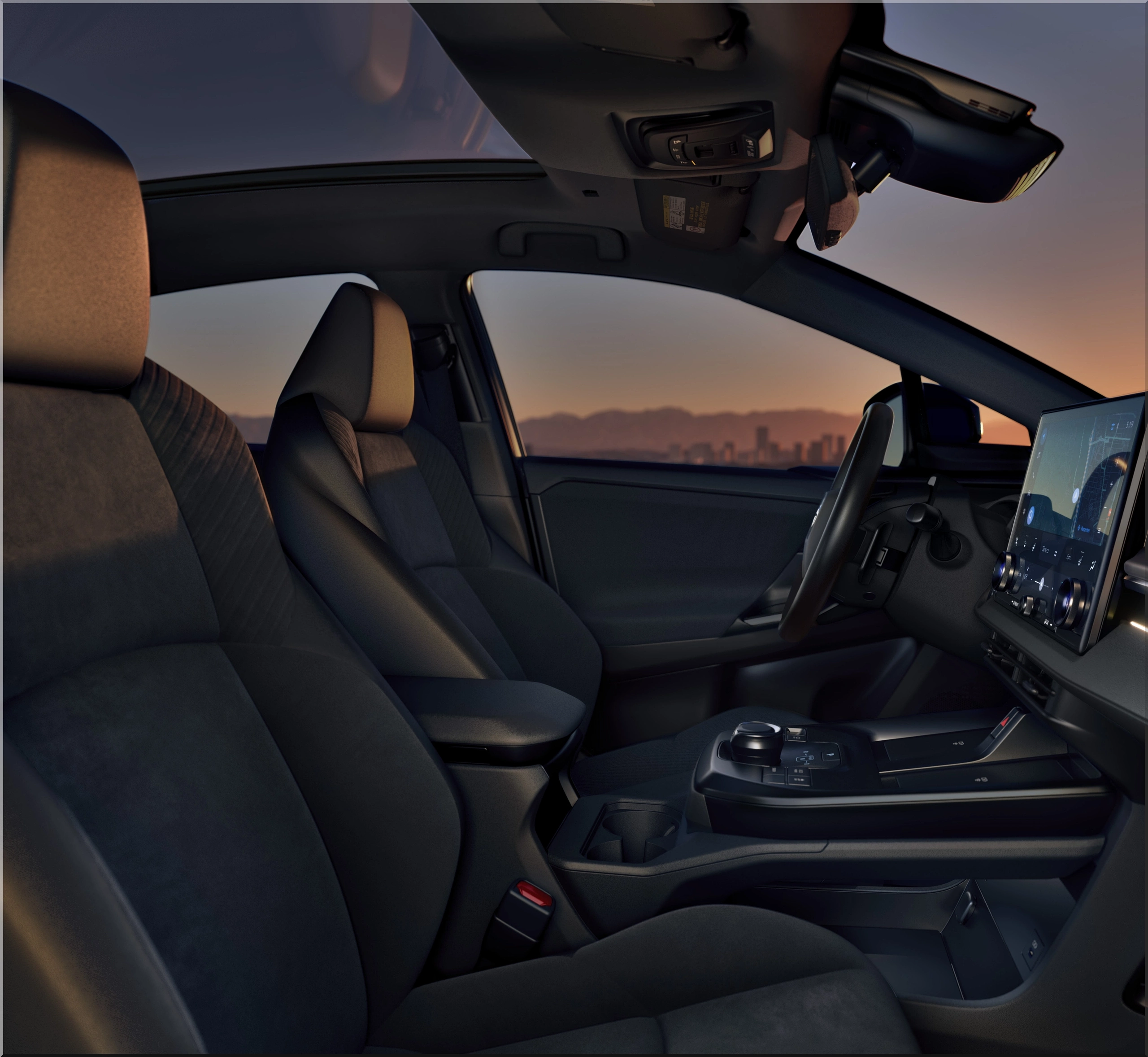
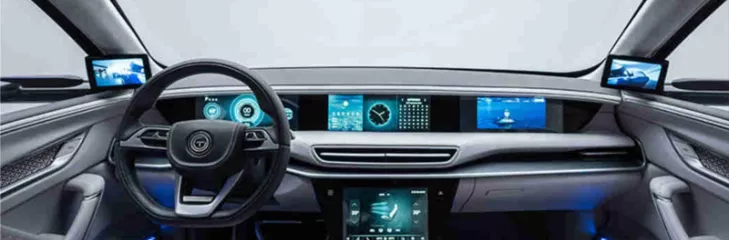
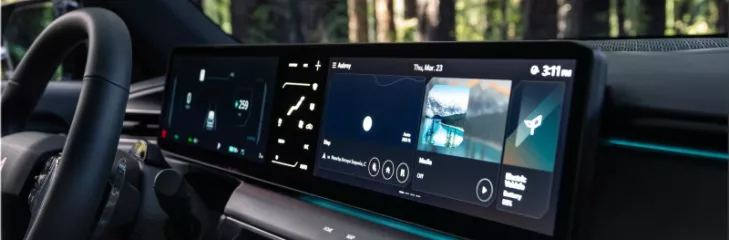
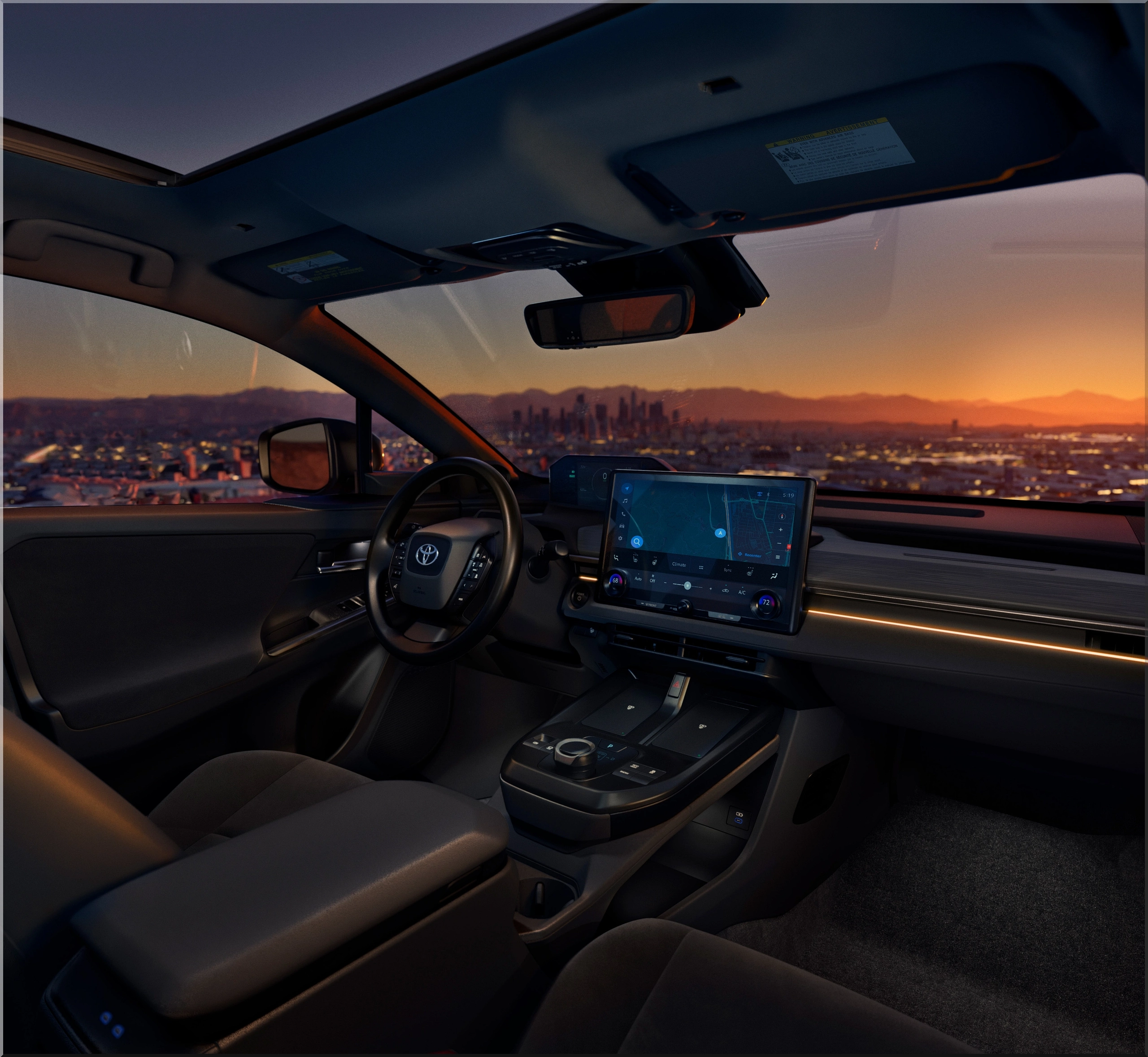
Toyota fits every C-HR with a 14-inch Toyota Audio Multimedia touchscreen. Wireless Apple CarPlay and Android Auto handle smartphone access, while a seven-inch driver display provides configurable driving information. The cabin also includes two wireless phone chargers, USB-C ports for front and rear passengers, dual-zone climate control, and rear air vents.
The SE includes heated front seats, a heated steering wheel, fabric and SofTex upholstery, a power liftgate, rain-sensing wipers, and low-profile roof rails. The XSE adds SofTex and synthetic-suede seating, an eight-way power passenger seat, driver's-seat memory, and a panoramic fixed glass roof with a power sunshade available as an option.
The XSE also adds a Panoramic View Monitor and Lane Change Assist. Those features help the driver monitor the vehicle's perimeter and reduce blind-spot stress during highway maneuvers. They do not remove the need to look around before moving several thousand pounds of metal toward another object.
Standard Driver Assistance
- Pre-Collision System with Pedestrian Detection.
- Full-Speed Range Dynamic Radar Cruise Control.
- Lane Departure Alert with Steering Assist.
- Lane Tracing Assist.
- Road Sign Assist.
- Automatic High Beams.
- Proactive Driving Assist.
- Blind Spot Monitor with Rear Cross-Traffic Alert.
- Safe Exit Alert.
- Front and rear parking assistance with automatic braking.
C-HR Versus Key Electric Rivals
The C-HR competes against several compact electric SUVs with different priorities. The Subaru Uncharted offers a lower-priced front-drive version with longer quoted range, while the Kia Niro EV focuses on efficiency and conventional crossover practicality. The Toyota's advantage comes from standard AWD and strong output at a relatively accessible starting price.
| Model | Power | Drivetrain | Estimated range | Starting price |
|---|---|---|---|---|
| 2027 Toyota C-HR SE | 338 hp | AWD | 287 miles | $37,080 |
| 2026 Subaru Uncharted Premium | 221 hp | FWD | More than 300 miles | About $35,000 |
| 2026 Subaru Uncharted Sport | 338 hp | AWD | More than 285 miles | About $39,800 |
| 2026 Kia Niro EV Wind | 201 hp | FWD | About 253 miles | About $39,700 |
| 2026 Hyundai Kona Electric | Up to about 201 hp | FWD or AWD | Up to about 261 miles | About $32,000 |
The C-HR wins the acceleration contest against the front-drive Kia Niro EV and the lower-output Uncharted Premium. The Subaru counters with a longer-range FWD version, which may appeal to drivers who face dry roads, mild winters, and no desire to accelerate away from stoplights as if an urgent appointment exists.
The XSE adds equipment but loses range compared with the SE. That makes the two trims easy to understand: the SE serves buyers who want the strongest value, while the XSE serves buyers who prefer upgraded materials, larger wheels, and additional camera coverage.
Should You Buy the 2027 Toyota C-HR?
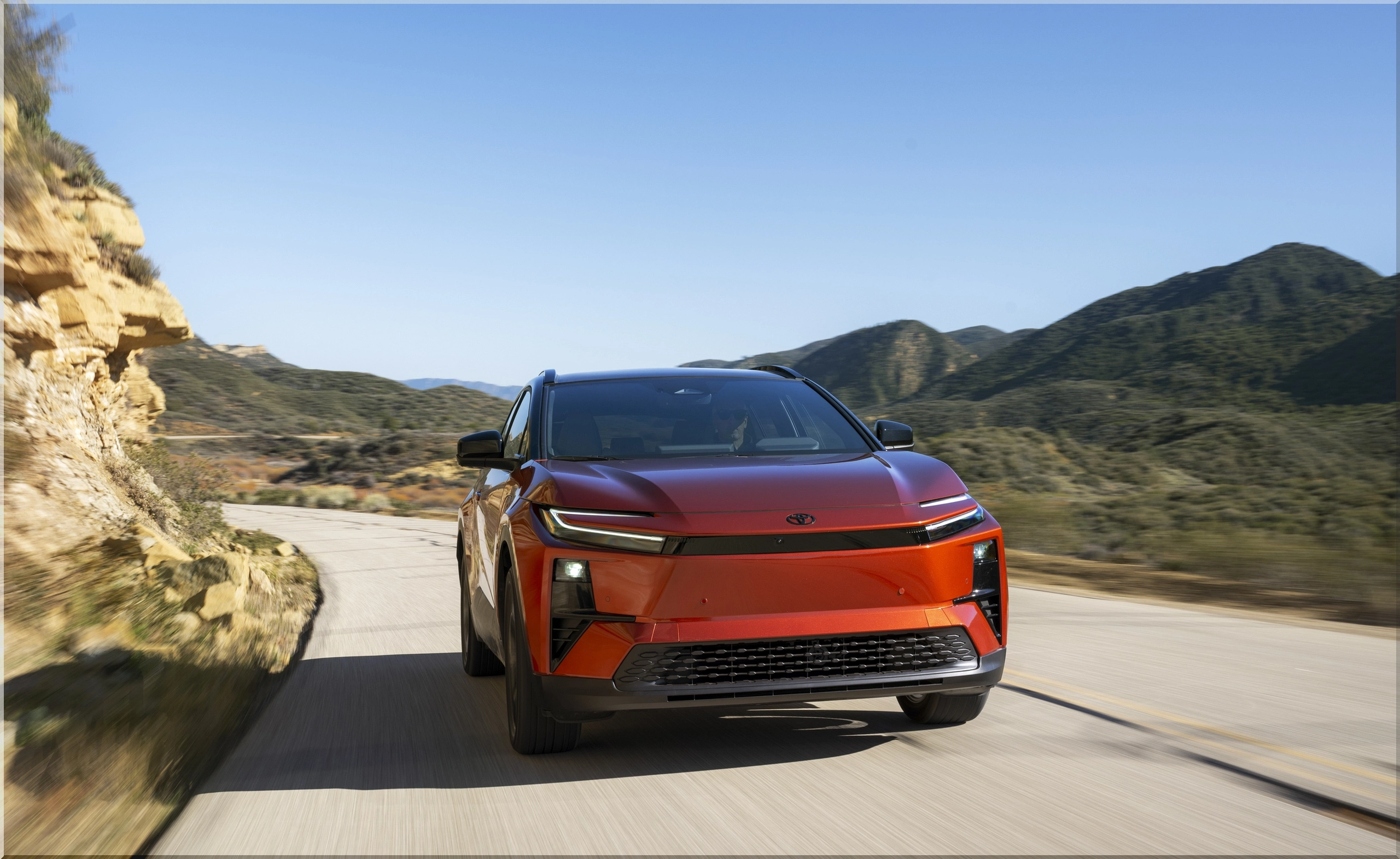
The 2027 Toyota C-HR EV makes a strong case for buyers seeking a quick, stylish compact SUV with standard AWD. Its 338 horsepower, 4.9-second acceleration estimate, 287-mile SE range, and 59.5 cubic feet of maximum cargo capacity give it a broad operating envelope.
Choose the SE for the best mix of range, price, and tire practicality. Choose the XSE for the upgraded interior, memory seat, surround-view camera, and available panoramic roof. The XSE looks the part, although the SE carries its smaller wheels with the quiet confidence of someone who has already checked the tire-replacement bill.
Toyota has given the C-HR a clear purpose. It delivers strong electric performance in a compact package, adds useful cargo capacity, and keeps charging hardware current with a NACS port. The result should appeal to drivers who want an electric SUV that can handle winter roads, highway merges, and the occasional supermarket parking battle without asking for a second mortgage.